
At a glance
What to pack for Skardu in any month
- One real insulating layer
- Nights are cold year-round at 2,230 metres, even after a warm afternoon. This goes in a July bag as well as a January one.
- A windproof outer shell
- Wind on the dunes and on the plateau is the real cold here, not the air temperature. It matters more than the thickness of what is underneath it.
- Two pairs of shoes
- One for sand and loose rock, one dry pair for the evening. Wet or sandy shoes dry slowly in a cold room.
- Sunglasses and high-factor sunscreen
- UV rises with altitude, and the open plateau and pale sand both reflect it straight back at your face.
- A charged power bank
- Valley power cuts are routine. Our generator covers lights, heating and Wi-Fi, not every socket in sixteen rooms at once.
- Cash in rupees, more than you budgeted
- Drivers, park fees, roadside tea and the bazaar are all cash. ATMs in town run dry over Eid and long weekends.
- Lip balm and a heavy moisturiser
- The air in Skardu is very dry in every season, including summer.
- Prescription medicine, in hand luggage
- There is no guarantee of a specific drug in town, and no guarantee your hold bag arrives on the same aircraft you do.
01
Layers, Not Coats: What to Wear in Skardu
The day-to-night swing is the thing to pack for
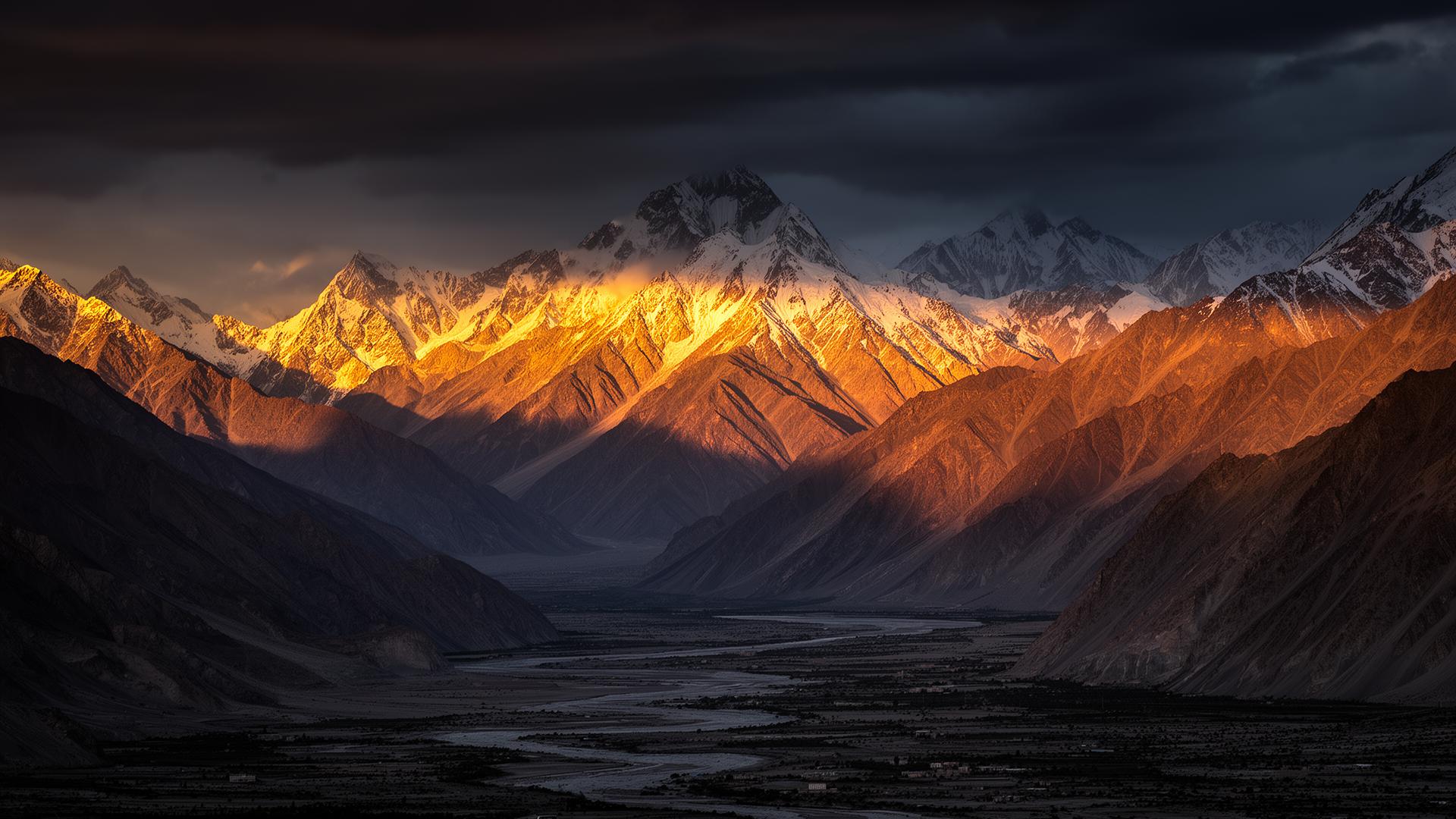
The single most common packing mistake we see is a guest who brought one very warm coat and nothing underneath it. Skardu's defining feature is not its cold but its range. A clear October day can be pleasant enough for shirtsleeves at noon on the valley floor and genuinely cold by seven in the evening, and the same is true in a milder way in July. One thick coat gives you two states: too hot, or carrying a coat. Three thinner layers give you five.
What works is a base layer you can walk in, a mid layer you can sit in, and a shell that stops wind. In practice: a long-sleeved cotton or merino top, a fleece or light down mid-layer, and a windproof jacket that packs down small enough to live in a daypack. Add a hat and gloves from October onward and you are equipped for most of what the valley will do to you.
The second mistake is dressing for the forecast instead of the exposure. Air temperature in the valley is not what you feel on an open dune at first light or on the Deosai plateau at midday. Wind and altitude do most of the work, which is why the shell matters more than the thickness of what sits under it.
Season by season, in gear rather than degrees
- April to May — blossom and shoulder
- Bright, mild days and often windy; cold nights. Full layer set, gloves still useful, and a rain shell for spring showers.
- June to August — peak
- Warm days, strong sun, cool to cold nights. Light clothes plus one real insulating layer. Sun protection is the priority, not warmth.
- September to October — the best weeks
- Crisp, clear and the finest light of the year; cold nights with the first frosts late on. Layers, a warm hat, gloves and something windproof for the lakes.
- November to March — winter
- Cold and often sunny by day, hard frost and sub-zero by night. Thermals, heavy insulation, waterproof boots with real grip, two pairs of warm socks.
02
A Note on Local Dress
What to wear in Gilgit-Baltistan, and why it is noticed
“Nobody here will correct you. They will still notice.”
Baltistan is a conservative, almost entirely Muslim region, and visitors are treated with real warmth. Dressing modestly — covered shoulders and knees for everyone, and a scarf within easy reach for women visiting mosques or village areas — costs nothing and is noticed. Trousers and long-sleeved tops are entirely normal, and nobody expects a visitor to wear a specific national dress.
A shalwar kameez is comfortable, practical in the heat, and widely available in the bazaar if you decide you want one once you are here. Nobody will tell you off if you get this wrong; people in this valley are too polite for that. They will still notice, and the small effort buys a warmer welcome than anything else on this list.
03
Footwear: Three Surfaces, Two Pairs of Shoes
Why hiking boots are the wrong answer for most of a Skardu trip
Guests routinely over-buy here. You do not need mountaineering boots to see Skardu, and on sand they are a poor choice.
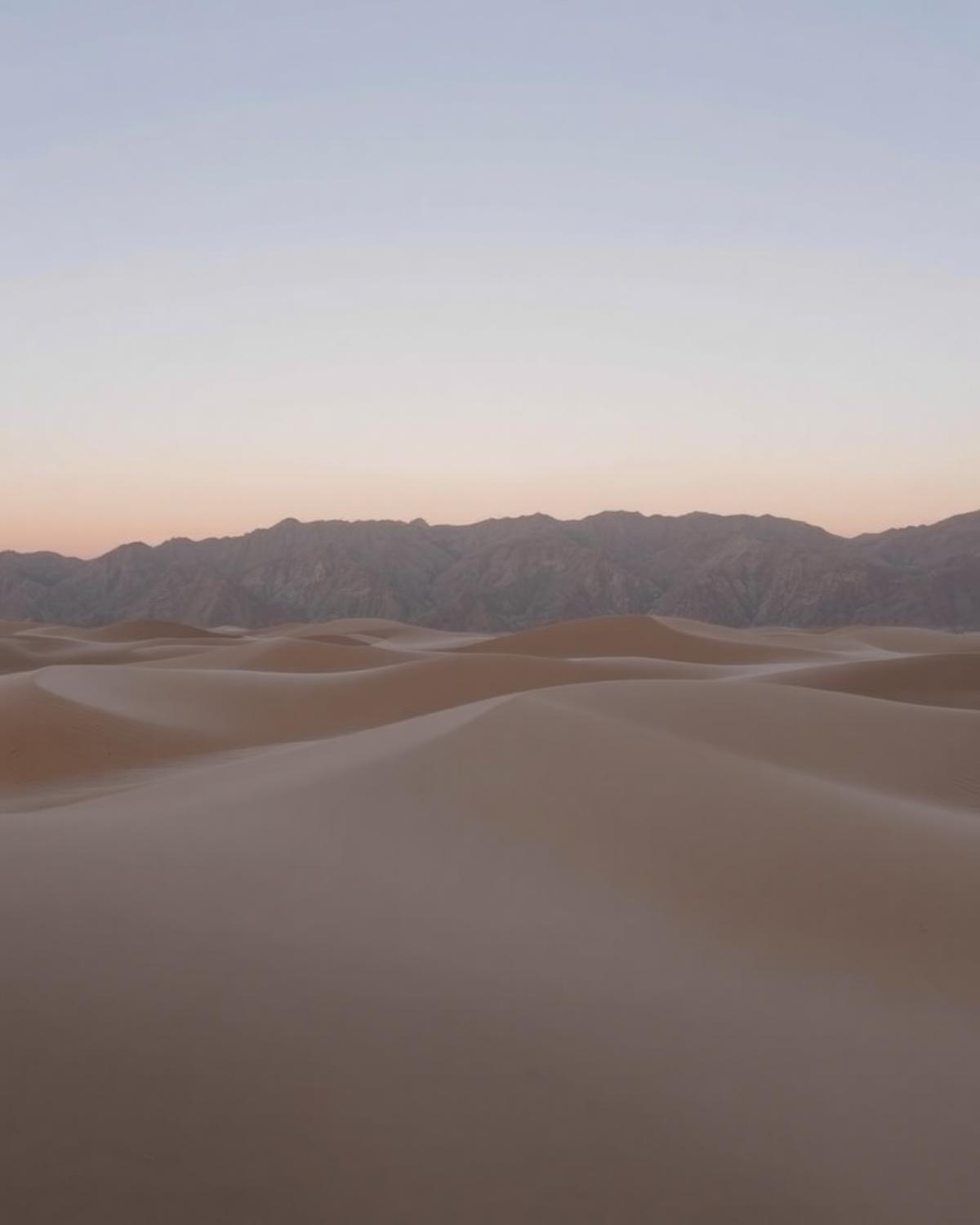
The dunes first. The Katpana cold desert is a ten-minute drive from our gate and the sand is soft and fine. Our own staff cross it in light trainers, and so should you. Sand gets into everything, so whatever you wear onto the dunes should be something you are happy to empty out afterwards. Low shoes with a closed heel beat sandals, which fill instantly.
Then rock, gravel and the lakeside paths. Kachura, Shigar, Satpara and the short walks around them are uneven but not technical. A trainer with a real sole, or a light hiking shoe, is right. Grip matters more than ankle support.
Snow and ice are the exception. From November to March, add a waterproof boot with aggressive tread and warm socks, because ice forms on shaded ground and stays there for months. If you are going to the plateau in the shoulder weeks, waterproof footwear is not optional — Deosai holds standing water and snow patches long after the valley floor is dry.
The second pair is not a luxury. Wet or sandy shoes in a cold room dry slowly, and having a dry pair to put on at the end of the day is the difference between a pleasant evening and a miserable one.
04
What to Pack for Deosai and the High Days
A day bag for 4,000 metres, packed separately from your luggage
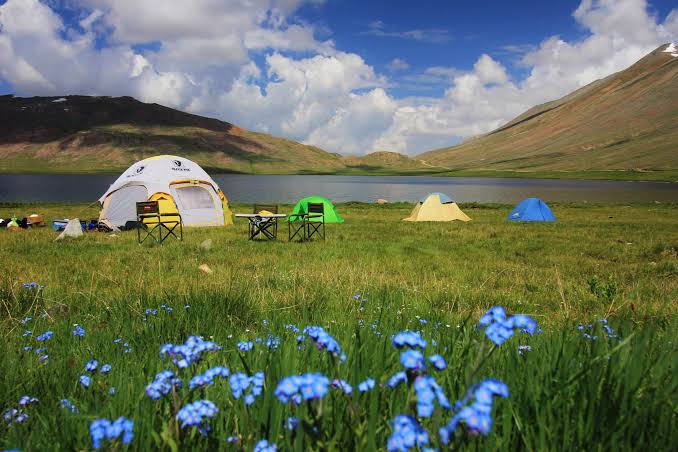
Skardu sits at roughly 2,230 metres. The Deosai plateau runs at around 4,000 metres, and the drive up gains most of that difference in a single morning. That changes the packing list more than any season does, and it is why we tell guests to pack a day bag separately rather than raiding a suitcase at six in the morning.
Into that day bag goes: one warm layer more than you think you need, because it can be pleasant in Skardu and genuinely cold on the plateau on the same afternoon; a windproof shell, because there is nothing up there to stand behind; more water than feels sensible and something to eat, because there are no shops; and a power bank, because there is no mobile signal across most of the plateau and a phone hunting for a network flattens itself by lunchtime.
Sun protection deserves its own line. The World Health Organization puts the increase in ultraviolet radiation at approximately 10% per 1,000 metres of altitude. On an open plateau with pale ground reflecting it back, that is a face burnt in an hour. Sunglasses, a brimmed hat and high-factor sunscreen, reapplied rather than applied once in the car park.
On altitude itself, the US CDC's guidance is that acute mountain sickness typically affects travellers sleeping above about 2,440 metres, and that the governing rule is never to climb higher to sleep while you have symptoms. Skardu sits just below that line, which is why most guests are fine in the valley and a few feel it badly on the plateau. Acetazolamide is a real preventive option, but it is a prescription drug with side effects — ask your own doctor before you travel rather than buying something on arrival. What you can pack without a prescription is simple painkillers, rehydration salts and the willingness to turn the jeep around.
We also sequence this for guests rather than leaving it to chance: flat days first, the plateau on day three or later. Nobody has ever regretted going up later than planned.
05
Power, Cash and Signal
The three things that catch visitors out, and what fixes each
Power first. Pakistan runs on 230 volts at 50 Hz, with type D and type C sockets in general use, so bring the adapter that matches and bring a power bank with it. Load-shedding in this valley is normal rather than exceptional. Our generator keeps lights, heating and the Wi-Fi running, but it is not sized to charge every device in sixteen rooms at once, and a camera battery that died on the plateau will not be full by breakfast. A multi-port charger and one good power bank solve this entirely.
Cash next. Carry more Pakistani rupees than your budget suggests, and carry them in smaller notes. Card terminals in Baltistan work when the network does, and the network depends on the weather. ATMs in the Skardu bazaar reliably run empty over Eid and long holiday weekends. Jeep hire, roadside tea, park entry and most bazaar purchases are cash transactions regardless. Withdraw before you fly and bring it in with you.
Signal last. Coverage in Skardu town is decent and patchy everywhere else. If connectivity matters, buy a local SIM at the airport you fly from rather than hoping to sort it here, and download your maps offline before you leave the city — there is no useful signal on the Deosai road, the Basho track, or long stretches of the Shigar and Khaplu valleys.
06
Skin, Sleep and the Dry Air
The part of a Skardu packing list nobody writes down
The air in Skardu is dry in every season, and it catches people out even in summer. Pack lip balm, a heavier moisturiser than you use at home, and eye drops if you wear contact lenses. Drink considerably more water than you would at sea level: dry air and altitude dehydrate you quietly, and a good deal of what visitors describe as altitude sickness down in the valley is simple dehydration.
A sleep mask is worth the space as well. Mountain light arrives early and hard, and in summer the valley is awake from first light whether you are or not.
07
What Not to Pack, Because We Already Have It
Four things that go home unused
Baggage on the Skardu sector is limited, so it is worth knowing what you can leave at home. Bedding and sleeping bags are the big one: rooms here are heated and carry proper winter bedding, and guests occasionally arrive with a sleeping bag for a hotel stay. It goes home unused. Camping on the plateau is a different trip and a different list.
Towels and basic toiletries are provided in both room types, so there is no need to pack your own. Bottled water for the room is here. A kettle or travel heater is unnecessary — the common room runs on tea from early morning, and the kitchen starts at six so guests on early flights are not leaving on an empty stomach. Unless you have specific dietary needs, you will also eat considerably better here than out of a bag.
What we cannot lend you is footwear, prescription medicine, or a jacket that fits. Those three are the ones worth the suitcase space.
08
Packing for a Flight That May Not Fly
Hand luggage is the part of the plan that matters
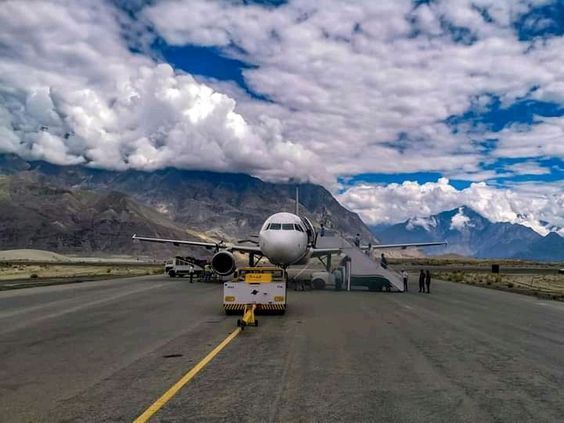
Skardu's airport works on visual approaches, which means the weather decides. Flights are cancelled often enough that the sensible packing strategy simply assumes it will happen to you.
Keep in your hand luggage: all medication, one warm layer, a phone charger, and enough to be comfortable for an unplanned extra night. If you end up rerouted to the road, that is a long two-day drive up from the plains, and you will want those things with you rather than in the hold.
Baggage allowances on the domestic sector are tighter than international ones and vary by airline and fare class, so check your own ticket against the carrier's current rules. We deliberately do not quote a figure in kilograms here, because it changes and a stale number on a web page helps nobody.
If your flight does go, we watch it. If it does not, the front desk holds the room and tells you honestly whether the road is worth attempting that day rather than selling you an answer you want to hear.
Unsure about one specific item for your dates? Ring before you buy it.
Ask the front deskHow we know this
The gear advice here is first-hand: it comes from sixteen rooms' worth of arrivals across every month of the year, from what guests ask us to lend them, and from what our own staff wear on the dunes and on the Deosai road. Figures we cannot observe ourselves are cited rather than asserted — the altitude effect on UV, the altitude-illness thresholds and the mains voltage all come from the published sources listed below. We do not quote a baggage allowance in kilograms, because it varies by airline and fare and a stale number on a web page helps nobody.
Reviewed: Each season, and whenever something a guest arrived without turns up twice in the same month.
Written and checked by the team that runs the house in Katpana, Skardu — the people who watch the Deosai road open and close, book the drivers, and answer the phone at midnight. Our editorial standards.
Sources
Where the figures come from
- World Health Organization — Radiation: Ultraviolet (UV) ↗
- "With every 1000 m in altitude, UV levels increase by approximately 10 per cent."
- US CDC Yellow Book — High Elevation Travel & Altitude Illness ↗
- Acute mountain sickness commonly affects travellers sleeping above about 8,000 ft (2,440 m); never ascend to sleep higher while symptomatic.
- WorldStandards — Plug, socket and voltage in Pakistan ↗
- Pakistan runs on 230 V at 50 Hz, with type D and type C sockets in general use.
- Pakistan International Airlines — Baggage guide ↗
- Current domestic allowances; check against your own ticket and fare class.
Questions
Questions Guests Ask Before They Fly
Yes. Summer days in the valley can be genuinely warm, but the nights are cold in every month of the year, and anything above the valley floor — the Deosai plateau, the lakes at dawn — is colder again. One real insulating layer and a windproof shell belong in a July bag as much as a January one. What changes between seasons is how much goes underneath them, not whether you bring them at all. The guests who are uncomfortable in July are almost always the ones who packed for the daytime forecast and nothing else.
Rooms & prices →Pack Light, Pack Warm, and Tell Us When You Land
The honest summary of what to pack for Skardu is this: fewer clothes than you think, in more layers than you think, with better shoes and more cash than you think. The rest is detail, and most of it changes with your dates, which is why the month-by-month guide is worth reading alongside this one.
Still unsure about one specific item for specific dates? Ring us before you buy it, on 0310 0973119 or on WhatsApp at the same number. We would rather talk you out of an unnecessary purchase than have you arrive with the wrong bag. And when you are ready to book, our rooms and rates are published in full — sixteen rooms, two room types, heating and breakfast in every rate, and a front desk that will be watching your flight.
Keep reading