
01
Geology and wind: how a desert forms in the Karakoram
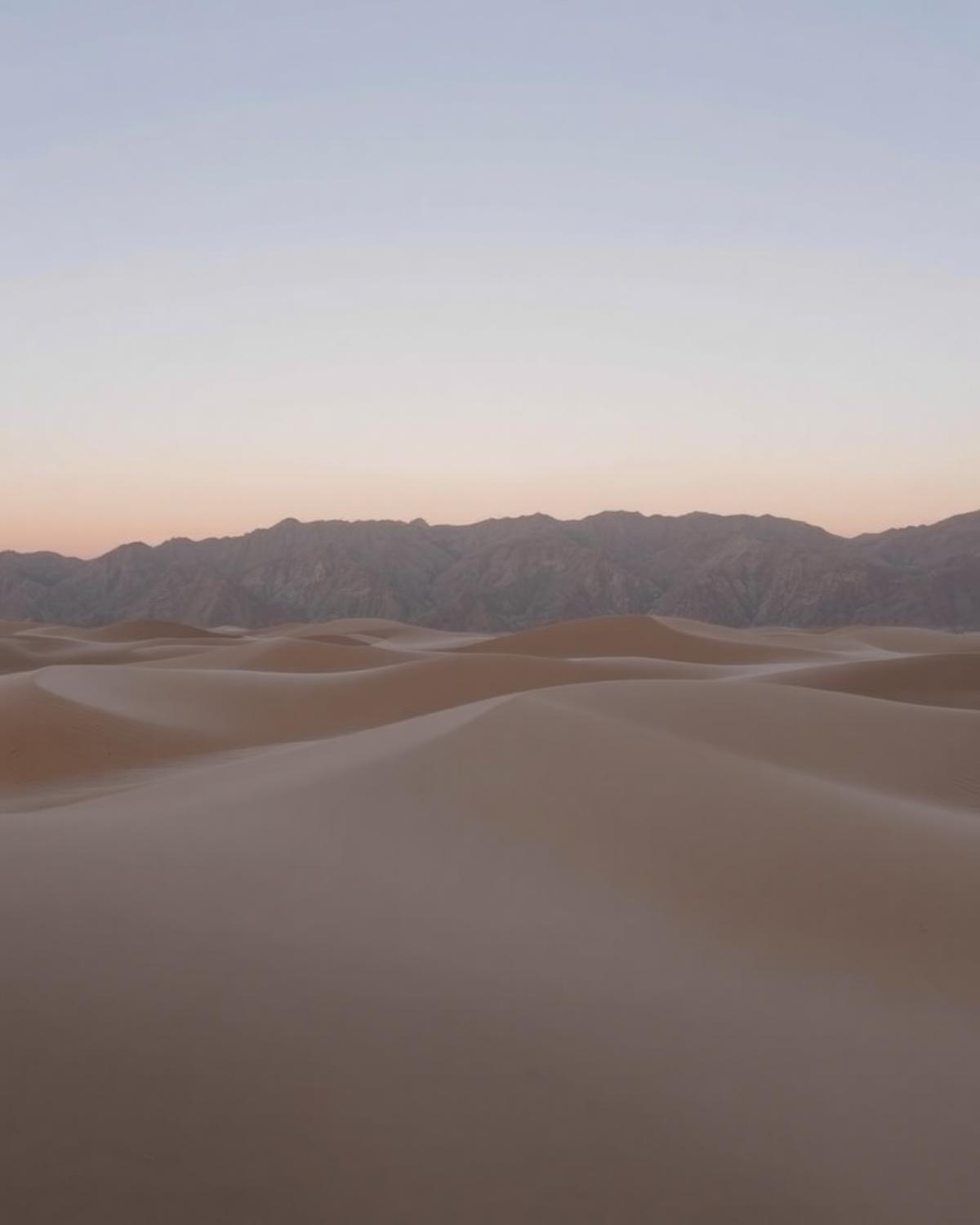
The sheer granite walls of the Skardu valley create a natural wind tunnel. For millennia, fierce winter storms have whipped across the braided river channels of the Indus, picking up fine glacial silt and depositing it precisely here. It builds up grain by grain, forming steep ridges that look entirely out of place against the imposing snow-capped mountains. This is not the Sahara. It is a glacial basin anomaly.
Altitude defines this environment. At 2,230 metres, the thin air holds very little moisture, leaving the sand exposed to sharp temperature variations. Summer surface heat can bake the soles of your shoes by noon, yet the night air invariably requires a heavy fleece. In winter, overnight frost binds the loose grains into a solid, crunchy crust that temporarily halts the shifting dunes until the morning sun finally thaws them.
Understanding this geology changes how you move through it. You are walking on pulverised rock, ground down by ancient ice sheets and blown into piles by the prevailing westerlies. The dunes remain notoriously restless. The landscape you photograph at sunrise will have its delicate crests entirely reshaped by the afternoon thermal winds, effectively erasing your footprints before dusk. Katpana requires you to accept its temporary, shifting desert nature.
02
The dawn walk: minute by minute on the dunes
“The transition from freezing darkness to fierce morning light is startlingly fast.”
Alarms go off early. At 5.15 AM, the air outside your room is sharp enough to wake you instantly. Ten minutes later, you leave the hotel gate and cross onto the sand. The desert is flat, grey, and entirely silent, save for the distant rush of the mighty river. Headlamps slice through the darkness, catching individual grains of silica along the path.
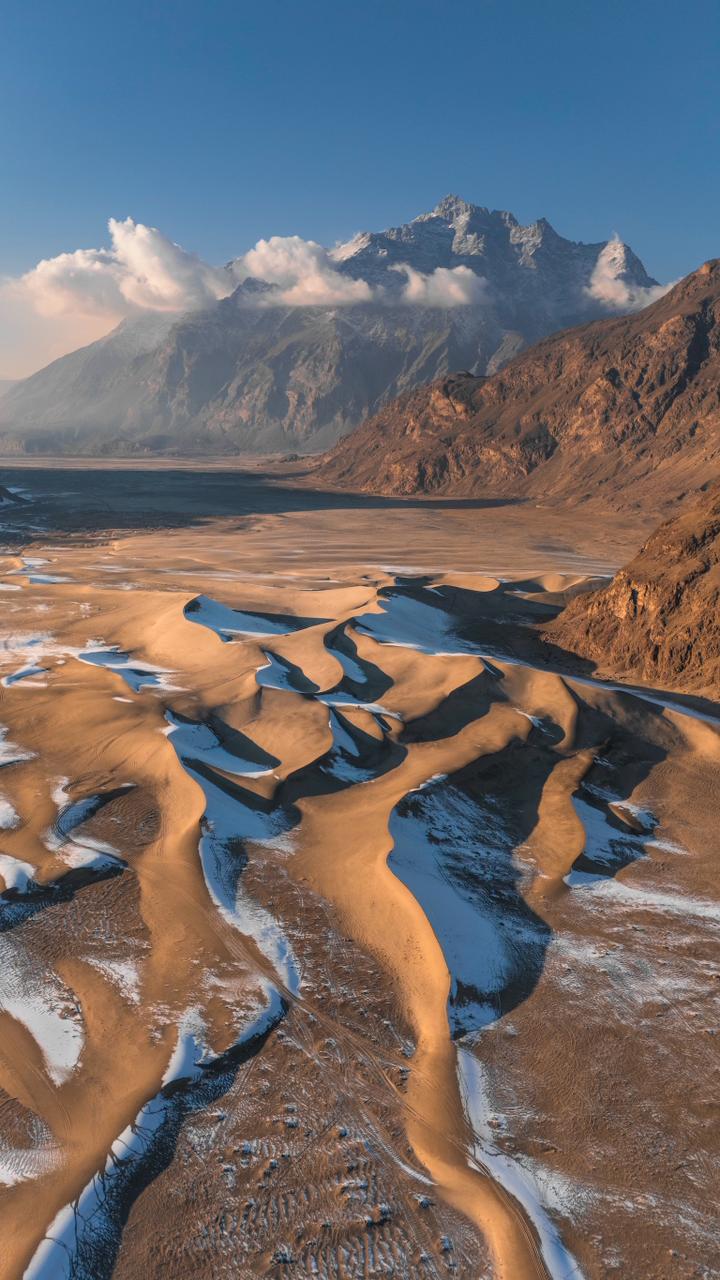
By 5.40 AM, the eastern horizon turns a bruised purple. The high peaks catch the sun long before the valley floor does, creating a glowing perimeter around the dark desert basin. You need to be on top of the highest local ridge right now. The climbing is exhausting in the cold, your boots giving way with every step, but the elevated vantage point is absolutely necessary for photography.
Exactly at 6.05 AM, the light breaches the valley wall. Instantly, the flat grey sand transforms into sharp orange crests and deep black shadows. The temperature rises noticeably within five minutes. You have roughly twenty minutes of perfect, low-angle light to shoot before the sun climbs too high and the contrast flattens out entirely. The transition from freezing darkness to fierce morning light is startlingly fast.
03
A photographer's timetable for Katpana
Midday light actively destroys the desert. Between 11 AM and 3 PM, the overhead sun bleaches the sand into a blinding, featureless white. The textures vanish. Instead, plan your day around the margins. Early morning offers the sharpest atmosphere, as the night chill settles the airborne dust. It is the definitive time for wide landscape shots showing the steep dunes framed sharply against the distant Karakoram mountains.
Late afternoon requires a substantially different approach. Around 4 PM, the westerlies typically pick up, lifting a fine haze of dust. This scatters the light, softening the shadows and turning the entire valley a warm, hazy gold. Photographers call this the dirty hour. It is less ideal for crisp mountain backdrops but perfect for backlit portraits and isolating wind-blown dune crests as the sun slowly drops lower.
The season severely dictates the angle. In June, the sun tracks high and the golden hour is disappointingly brief. By late October, the sun stays notoriously low in the southern sky all day. This creates long, dramatic shadows even at noon. Autumn is undoubtedly the strongest season for serious landscape work in Skardu, offering a reliable clarity that the hot, hazy summer months simply cannot match.
A rough timetable for the dunes
- 5.45 AM to 6.30 AM
- Dawn light. Sharp contrast and long shadows. Best for landscape photography.
- 11.00 AM to 3.00 PM
- Overhead sun. Bleached sand and flat textures. Avoid shooting during these hours.
- 4.00 PM onwards
- The dirty hour. Rising thermal winds lift dust, creating a warm, hazy gold.
- June vs October
- Summer sun tracks high. Autumn sun stays low, extending the golden hour.
04
Waiting for the dark: moon phases and night shooting
Night fundamentally changes the scale of the valley. Without the mountains to anchor your vision, the dunes feel boundless. Because Katpana sits closely outside the main Skardu bazaar, light pollution is present but manageable. If you walk fifteen minutes deep into the dunes, pointing your lens north towards Shigar, the skies open up brilliantly. The darkness here is heavy, cold, and immensely quiet after the wind dies.
The moon completely controls the working schedule. A full moon washes out the Milky Way, turning the night sky a flat blue. However, it illuminates the sand so brightly that you can hike without a torch, casting sharp shadows that make the desert look like a lunar landscape. It is a surreal physical experience, though entirely useless for those attempting deep-sky photography or capturing faint star trails.
Shooting the Milky Way
For the Milky Way, you need a new moon and a clear forecast. The galactic core stands visible during the summer months, rising above the southern ridges. Night temperatures drop steeply out here, even in July. Pack extra batteries, as the bitter cold drains lithium quickly, and set your tripod deep into the sand to prevent wind vibration. Patience is required as your eyes adjust to the dark.
05
Walking the ridges: wind forces and what to wear
“Wind serves as the true architect of Katpana, erasing your footprints before dusk.”
Wind serves as the true architect of Katpana. It picks up predictably in the early afternoon, funnelling down the Indus corridor. By 3 PM, a low layer of stinging sand often skims across the surface, roughly ankle-high. You will feel it sharply against bare legs. Glasses or goggles become essential if you plan to stay out long, and changing lenses in the field is a highly risky gamble.
Footwear requires choosing between two deeply flawed options. Heavy hiking boots keep the sand out for a while, but they weigh you down terribly on the steep ascents. The loose sand yields stubbornly under stiff soles. Conversely, lightweight trail runners let you move fluidly across the fragile ripples, but they fill with abrasive grit almost immediately, forcing you to stop and empty them every few hundred metres.
The local compromise remains deliberately simple. Wear light trainers and accept the sand, stopping to empty them when necessary. Alternatively, if the afternoon sand is cool enough, just walk barefoot. The surface feels incredibly soft, though you must constantly watch for the occasional sharp river stone or thorny scrub hidden just beneath the surface. Walking without shoes connects you instantly to the temperature of the deep sand.
06
Summer haze to winter snow: the changing landscape
April brings a hesitant thaw to Baltistan. The dunes are often damp, giving the sand a darker, heavier appearance. The pale apricot blossoms in nearby orchards contrast wildly with the barren ridges. By July, the desert is dry, pale, and constantly shifting. Summer days feel intensely hot, pushing visitors toward the early morning and late evening margins, leaving the midday sands entirely empty and baking in the sun.
October strips the heavy haze from the air. This marks the shoulder season, when the valley turns copper and gold. The air becomes crisp, and the wood-burner in our common room gets lit for the first time. The dunes hold a richer, deeper hue in the autumn light, making it the most visually striking time to visit. The crowds vanish, leaving the ridges silent and untouched again.
Snow on sand
Winter is genuinely severe and magnificent. January temperatures routinely drop well below freezing, and the hotel runs quietly for those few who brave the cold. When it snows, the white powder settles over the orange sand, creating an impossible zebra-striped landscape as the wind partially clears the high ridges. It is freezing, difficult to reach, and deeply rewarding for anyone willing to endure the harsh Baltistan winter.
Ask us about winter availability
Call the front desk07
Accessing the sand: jeeps, soft tracks and walking
Many deserts require hours of bone-jarring off-road driving just to reach the perimeter. Katpana is uniquely accessible. It sits practically inside the Skardu town limits. The paved road brings you right to the edge, where the tarmac simply gives up against a solid wall of encroaching sand. You can step out of a standard sedan and walk straight onto a dune without negotiating a single dirt track.
Taking vehicles onto the sand itself is an entirely different matter. Do not attempt to drive a rental car past the tarmac. The crust is deceptive, and the powder beneath is bottomless. Only local 4x4 drivers, who automatically drop their tyre pressures to fifteen PSI before crossing the threshold, truly belong out there. Getting stuck means a long wait for a tractor to pull your vehicle free.
Walking remains by far the easiest method. From Arcadian Hotel & Resort, the desert is effectively our front garden. A ten-minute walk through the village lanes puts you directly on the sand. You never have to negotiate for a jeep or nervously watch a clock. You just walk out when the light looks right and return when you are hungry. The simplicity fundamentally changes the experience.
Drive times from the sand
- Arcadian Hotel & Resort
- 10 minutes on foot to the dune edge.
- Skardu Airport
- 10 minutes by car.
- Kharpocho Fort
- 15 to 20 minutes by car.
- Satpara Lake
- 25 minutes by car.
- Lower Kachura
- 30 minutes by car.
- Deosai National Park
- 2.5 hours by 4x4 jeep.
08
Two cold deserts: Sarfaranga and Katpana compared
Skardu actually possesses two distinct expanses of sand. Katpana is the local, accessible desert, known for its high ridges and close proximity to the town. Sarfaranga lies much further out, about 45 minutes beyond the airport on the road to Shigar. Visitors often ask which they should dedicate their limited time to, wrongly assuming one location must be vastly superior to the other for landscape photography.
Sarfaranga is wider, flatter, and heavily exposed. It feels significantly more remote, bordered closely by the fierce grey waters of the Shigar river. It is the famous site of an annual jeep rally, meaning the sand is often scarred by deep tyre tracks near the main access points. You go there for sheer scale and the bleak, beautiful isolation of the wider valley opening up before you.
Why scale matters
Katpana is steeper and much more dramatic. The dunes pile higher against the sparse treeline, offering better climbing and much deeper shadows. Because it is so close to your base, it allows for repeated visits. You can shoot Sarfaranga once during a day trip to Shigar, but you can quietly learn the shifting moods and angles of Katpana over several days of morning walks and evening returns.
The neat way to use Sarfaranga is to bolt it onto the day you drive north anyway: Shigar Fort in the morning, an hour of metalled valley floor each way, and the sand on the way back in the last of the light.
09
Using the hotel as a desert base camp
Proximity dramatically changes traveller behaviour. When your room is thirty minutes away by car, you visit a location once, take your photographs, and leave. When your base is a ten-minute walk from the dunes, the desert becomes part of your routine. You stop treating it as a ticketed attraction to be checked off and start treating it as your temporary local park for evening strolls.
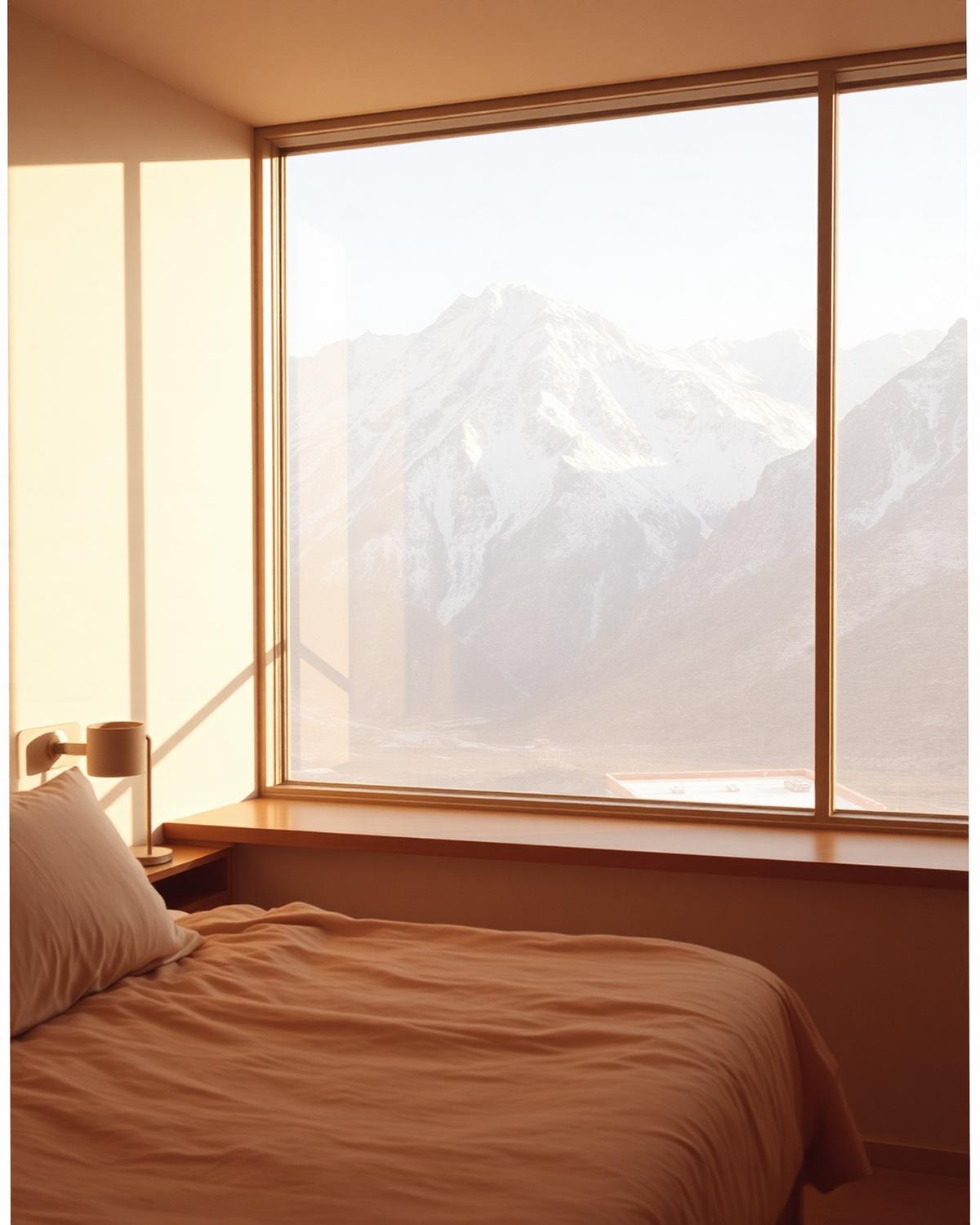
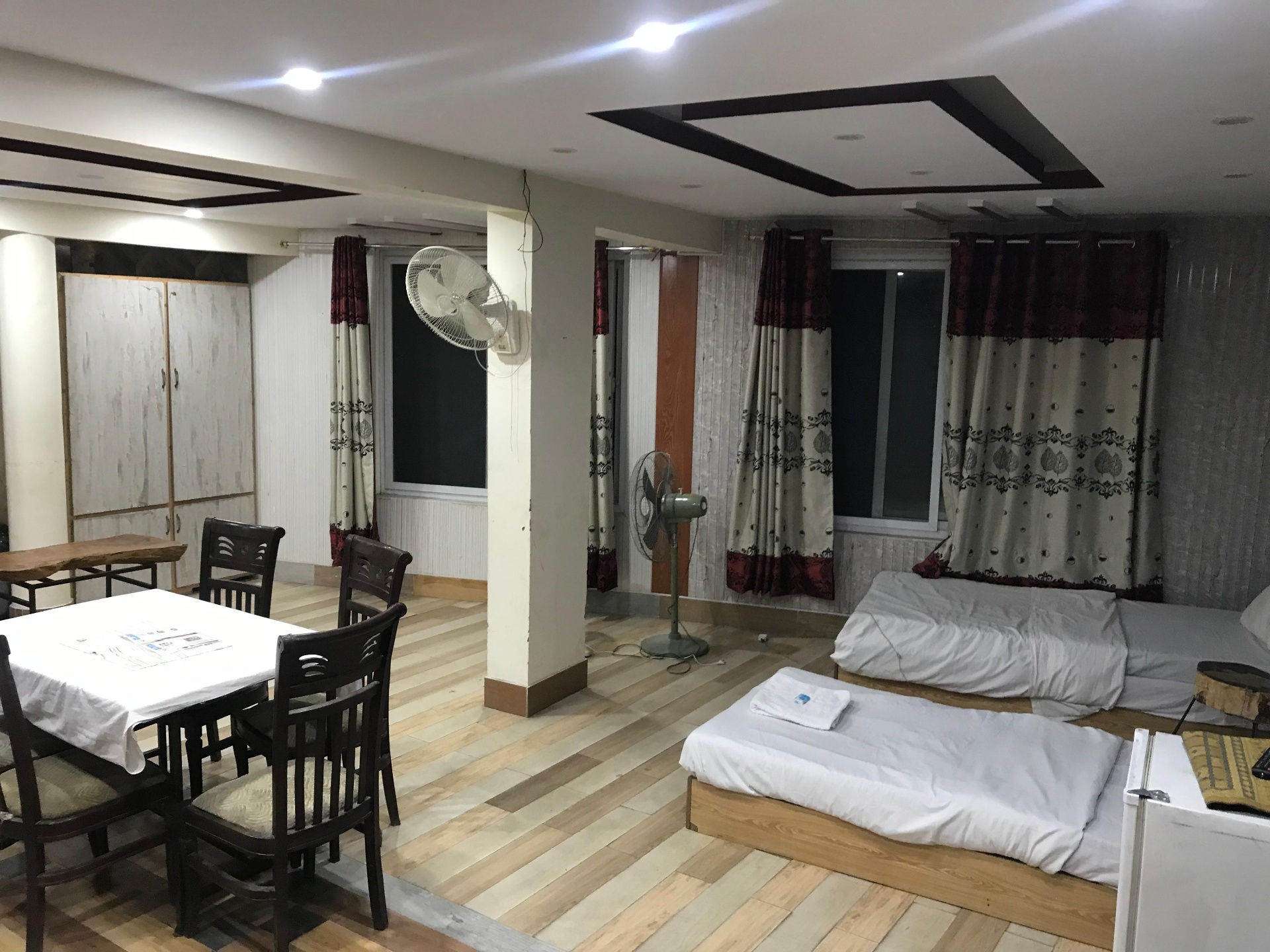
Arcadian Hotel & Resort is deliberately designed for this rhythm. Our team of ten keeps things running efficiently around early departures. If you want to shoot the dawn light, we ensure hot water is reliable and breakfast begins promptly at 6 AM. The sixteen rooms are highly practical spaces, built to quietly return to after spending hours fighting the wind, sand, and harsh sun out on the ridges.
Honest trade-offs exist when staying this close to the elements. The Economy Single Room is simple and compact, a sensible choice if you are only passing through for a night. The Deluxe Double Room adds a private balcony and a lake view, though the wind rattles the windows harder during a fierce storm. We bake fresh walnut bread, serve strong local tea, and work hard to keep the fine sand outside.
View our sixteen rooms
See the accommodation10
Building your itinerary around the dunes
A single day requires extremely tight timing. Start before sunrise on the Katpana ridges. Return to the hotel by 8 AM for mamtu and hot tea. Spend the harsh midday hours visiting Kharpocho Fort, roughly twenty minutes away, where the elevation offers a sweeping view of the entire valley basin. Drive out to Lower Kachura and Shangrila in the afternoon, returning when the temperatures finally begin dropping.
Three days allow you to actually absorb Baltistan. Dedicate day one to the immediate Skardu area: Katpana at dawn, the historic bazaar, and Satpara Lake in the afternoon. Keep day two entirely for the Shigar valley, crossing the vast Sarfaranga desert and returning in time for a late dinner. This pace prevents the scenery from blurring together into an exhausting reel of endless rough mountain roads.
Use the final day for the high plateau. Deosai National Park is a grueling two-and-a-half-hour drive from the hotel, but the alpine tundra is entirely different from the valley sand. Return thoroughly exhausted, dust off your boots, and eat a bowl of hot apricot soup. Our kitchen serves simple, honest food that makes perfect sense after a freezing day exposed to the high altitude elements. Before you commit to that drive, read our guide to the Skardu to Deosai road, which covers the altitude gain, the season dates and what the gate actually charges. Pair the dunes at last light with the Kachura lakes in the morning and you have the two best half-days in the valley in a single day.
Questions
Practical Questions About the Sand
Katpana qualifies as a cold desert due to its high altitude. Sitting at 2,230 metres in Gilgit-Baltistan, it experiences freezing winter temperatures rather than tropical heat. The sand itself is glacial till, ground down by ancient ice and carried by the Indus river. High westerlies lift this fine dust, depositing it in the Skardu basin. The extreme lack of moisture in the mountain air results in freezing nights, even when summer daytime temperatures feel intensely hot. The environment is entirely defined by altitude, wind, and glacial dust.
Rooms & prices →Plan your stay in Skardu
The desert is not going anywhere, but the season remains notoriously short. Between April and October, flights from Islamabad run daily, though the mountain weather often dictates the final schedule. Driving overland requires two full days.
When you arrive, Arcadian Hotel & Resort provides a quiet base where the tarmac meets the sand. We keep rooms warm and the hot water running. To book, call or WhatsApp our front desk on 0310 0973119.
Keep reading