
At a glance
Skardu summer at a glance
- Hottest month
- July — mean daily high 31.6 °C on the valley floor, mean low 16.4 °C.
- Deosai access
- Late May to late June onwards. July and August are close to certain. No published date.
- Busiest weeks
- Pakistani school holidays, roughly June to mid-August, plus Eid and Independence Day weekend.
- Book ahead
- Two to three months for July, August and holiday dates. Sixteen rooms is not many.
- The real risk
- Not Skardu's weather — the monsoon-belt road in, and GLOF season on the glaciers.
01
What summer actually does to the valley
A fifteen-degree swing inside a single day.
Skardu sits at roughly 2,230 metres, and people arriving from Lahore or Karachi expect that altitude to deliver a hill station. It does not. The Pakistan Meteorological Department's station normals give June a mean daily high of 28.7 °C, July 31.6 °C and August 31.2 °C. Those are real numbers, and in the middle of a July afternoon on the valley floor they feel like it.
What saves the season is the second column. June's mean low is 13.4 °C, July's 16.4 °C, August's 16.0 °C. That is a fifteen-degree swing inside a single day, and it is the reason a Skardu summer works: the afternoons are hot, and the evenings on a balcony are close to perfect. Guests who plan around the daytime figure alone are the ones who find the season disappointing, because they spend the good hours indoors and the hot ones walking around a fort.
The rainfall figures are the ones that mislead people most. June 9.0 mm, July 9.8 mm, August 12.2 mm — barely more than the driest autumn months, because Baltistan sits in a rain shadow behind the Himalaya and the monsoon largely does not reach this far north. That statistic is true and it is also, by itself, dangerously reassuring. We come back to it below.
One honest caveat, the same one we attach to every season: those normals end in 2009, and several popular consumer weather sites publish noticeably cooler Skardu figures derived from satellite reanalysis rather than a ground station. Treat any single number as the middle of a range, not a promise.
Skardu summer, by the station record (PMD, 1961–2009)
- June
- Mean high 28.7 °C, mean low 13.4 °C. Rainfall 9.0 mm.
- July
- Mean high 31.6 °C, mean low 16.4 °C. Rainfall 9.8 mm.
- August
- Mean high 31.2 °C, mean low 16.0 °C. Rainfall 12.2 mm.
- Altitude
- Roughly 2,230 m at the airport and valley floor, rising toward 2,500 m across the wider valley.
- Deosai plateau
- Averages 4,114 m — close to freezing at dawn in July, on the same day the valley reaches 30 °C.
02
The only Deosai window — and it still does not open on a date
Late May to late June, depending entirely on the snowmelt.
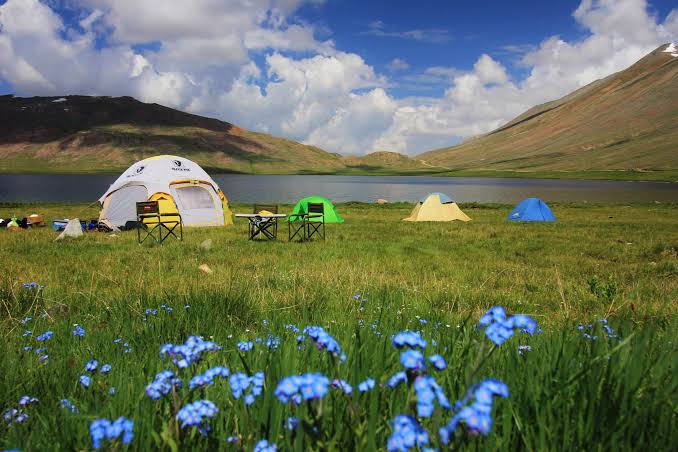
Deosai is why most people come in summer, and it is worth being precise about what "open in summer" means. The plateau averages 4,114 metres. Neither the Gilgit-Baltistan Tourism Department nor the province's Forest, Wildlife and Environment Department publishes an opening date, a closing date or an entry tariff. The tourism department says only that it is accessible in the summers. The park's own official page carries no season at all.
In practice the road becomes passable somewhere between late May and late June, depending entirely on how the winter's snow melts out. July and August are the two months when it is close to certain, which is the single strongest argument for a summer trip over the clearer, quieter autumn. If Deosai is the reason you are booking, July is the safest month on the calendar for it.
Two things surprise people on the day. The first is the cold: it can be 31 °C in our garden and a few degrees above freezing at Bara Pani at dawn, and every summer we lend out jackets to guests who looked at the Skardu forecast and dressed for it. The second is the time. Treat Deosai as a full day, leave before six, and do not stack it against anything else.
The same window governs the road in. Babusar Pass, at about 4,173 metres, is the scenic route from Naran and is shut by snow for roughly seven months a year — in 2025 it reopened on 24 May after a seven-month closure, with the National Highway Authority clearing more than twenty glaciers on the Naran side first. Summer is the only season it is a real option. Outside it, you route via Chilas.
Our drivers run the Sadpara road all summer and will tell you what it did this morning.
Call 0310 097311903
The monsoon problem that is not in Skardu's rainfall figures
Skardu is dry in summer. The road to Skardu is not.
“Your destination's rainfall figure tells you nothing about whether the road will be open.”
This is the part we would want a guest to read before booking a July trip, and it is missing from almost every summer guide to Skardu we have seen.
Skardu is dry in summer. The road to Skardu is not. The drive from Islamabad runs up the Karakoram Highway through Kohistan and Besham — country that is squarely inside the monsoon belt — before turning east at Juglot onto the Baltistan Road. The 167-kilometre Baltistan Road was rebuilt and reopened in December 2021 and cut the final leg to around four hours, but the tunnels originally planned were left out of the scheme, so it remains exposed to landslides and does get blocked. Your destination's 9.8 millimetres of July rain tells you nothing whatsoever about whether the road will be open.
The second factor is glacial. July and August are when Gilgit-Baltistan's glacial lakes are most likely to burst, and the National Disaster Management Authority issues GLOF alerts for the region most summers — it issued one for Gilgit-Baltistan and Khyber Pakhtunkhwa on 4 July 2025, warning of sudden outburst events and advising tourists specifically to avoid trekking in glacier-prone areas and not to cross streams by vehicle. We are not raising this to frighten anyone out of a summer holiday, and the overwhelming majority of summer visits pass without incident. We raise it because the sensible responses are easy and most people do not know to take them.
Those responses are: build a buffer day at the end of the trip rather than the beginning; do not book a same-day onward international connection out of Islamabad; do not cross a flowing nullah in a vehicle, however shallow it looks, and do not camp beside one; take the NDMA Disaster Alert app before you travel; and ask locally on the morning rather than reading a website the week before. There is no live road-status feed for Gilgit-Baltistan. There is only somebody who drove it yesterday — which, as it happens, is what our drivers are for.
Flights are the other half of it. Three carriers currently fly Islamabad to Skardu — Pakistan International Airlines, Airblue and AirSial — into an airport whose approach is flown visually because the terrain permits no instrument landing system. Settled summer weather is the best of the year for this, and it is still not a guarantee. Nobody publishes seasonal reliability figures for the route, and anybody quoting you a percentage has invented it.
04
Crowds: what fills, when, and how to get around it
Move your day three hours earlier than everyone else.
Summer is the valley's earning season, and it feels like it. Pakistani school holidays run from roughly June to mid-August, and Eid and the Independence Day weekend compress a month's demand into four nights. The bazaar fills, the Shangrila car park fills, and the popular water at Upper and Lower Kachura is genuinely busy by late morning.
The fix is not to avoid the places. It is to move your day three hours earlier than everyone else. Almost all domestic traffic leaves a hotel between nine and ten; the coaches reach Kachura around eleven. Breakfast here runs from six precisely so our guests can be at the lakes by half past seven and back before the crowd arrives. The same trick works at Katpana, at Sarfaranga and at Shigar Fort, and it has the side benefit of putting you in the good light rather than the flat midday glare.
Book much earlier than feels reasonable. For July, August, Eid and the blossom fortnight we tell guests two to three months ahead, and sixteen rooms is not many. Drivers and jeeps need the same lead time — in peak weeks the good Deosai drivers are spoken for.
05
Which summer days work, and the hours that matter
Mornings and evenings outdoors; the middle of the day at altitude, in water, or indoors.
The organising principle of a summer day here is simple, and guests who build the week around it describe the season completely differently from guests who do not. Mornings and evenings belong outdoors. The middle of the day belongs either at altitude, in water, or inside.
Two places invert their usual reputation in summer. The Katpana cold desert, ten minutes from our gate, is genuinely hot sand by eleven in July — the name describes the winter, not the season you are visiting in. Manthoka, by contrast, is at its strongest of the year, because summer snowmelt is exactly what feeds it; it runs far thinner by October. Basho is the valley's own escape from the heat, forest and meadow between roughly 3,000 and 3,600 metres, metalled as far as the Basho bridge and 4x4 only above it.
06
Packing for a hot valley and a cold plateau
The summer packing error is the mirror image of the autumn one. People pack for 31 °C, drive to 4,114 metres, and spend the best hour of the trip shivering in a car.
Pack light cotton and long sleeves for the valley — long sleeves genuinely beat short ones here, because the sun at 2,230 metres is fierce in a way the air temperature does not signal. Then pack one properly warm layer and keep it in the car every single day, not just the Deosai day. Add a wide-brimmed hat, real sunglasses and high-factor sunscreen, which matter more in July than most visitors expect.
Bring sturdy shoes for dust and gravel, a power bank for the valley's outages, and considerably more cash in rupees than you think, because ATMs outside Skardu town are unreliable and gate fees and jeep hire are settled in cash. A swimming costume is worth packing for Kachura. Rehydration salts are worth packing for the first two days.
07
How a summer week runs from Katpana
Sixteen rooms, air conditioning that earns its keep, and breakfast from six.
We sit at Katpana on the western edge of Skardu, ten minutes from Skardu International Airport and the same again from the cold desert dunes. Sixteen rooms across two room types, and a team of ten who run the house through the year — which is the only real advantage we have over a guidebook, because the drivers come back each evening and say what the road was like.
The rooms are air conditioned, which in this valley is a summer-only relevance and a real one on a 31-degree afternoon. Breakfast runs from six for the early starts the season demands. Currently the Deluxe Double Room — balcony, lake view, for up to two guests — is PKR 10,800 a night after our twenty percent Getaway Deal, reduced from PKR 13,500, plus PKR 1,080 in taxes; the Economy Single Room is PKR 9,180, reduced from PKR 11,475, plus PKR 918. Late June to the first week of September prices at peak across the whole valley, and if your dates fall on Eid or the Independence Day weekend, expect peak pricing whatever the calendar month says.
One piece of advice we give against our own interest every summer: if you are not tied to school holidays and Deosai is not essential, come in the second half of September or in October instead. It is cheaper, quieter and clearer. If you are tied to the holidays — and most families are — then July and August are a fine trip, provided you start your days early and treat the journey in and out as the part that needs the contingency.
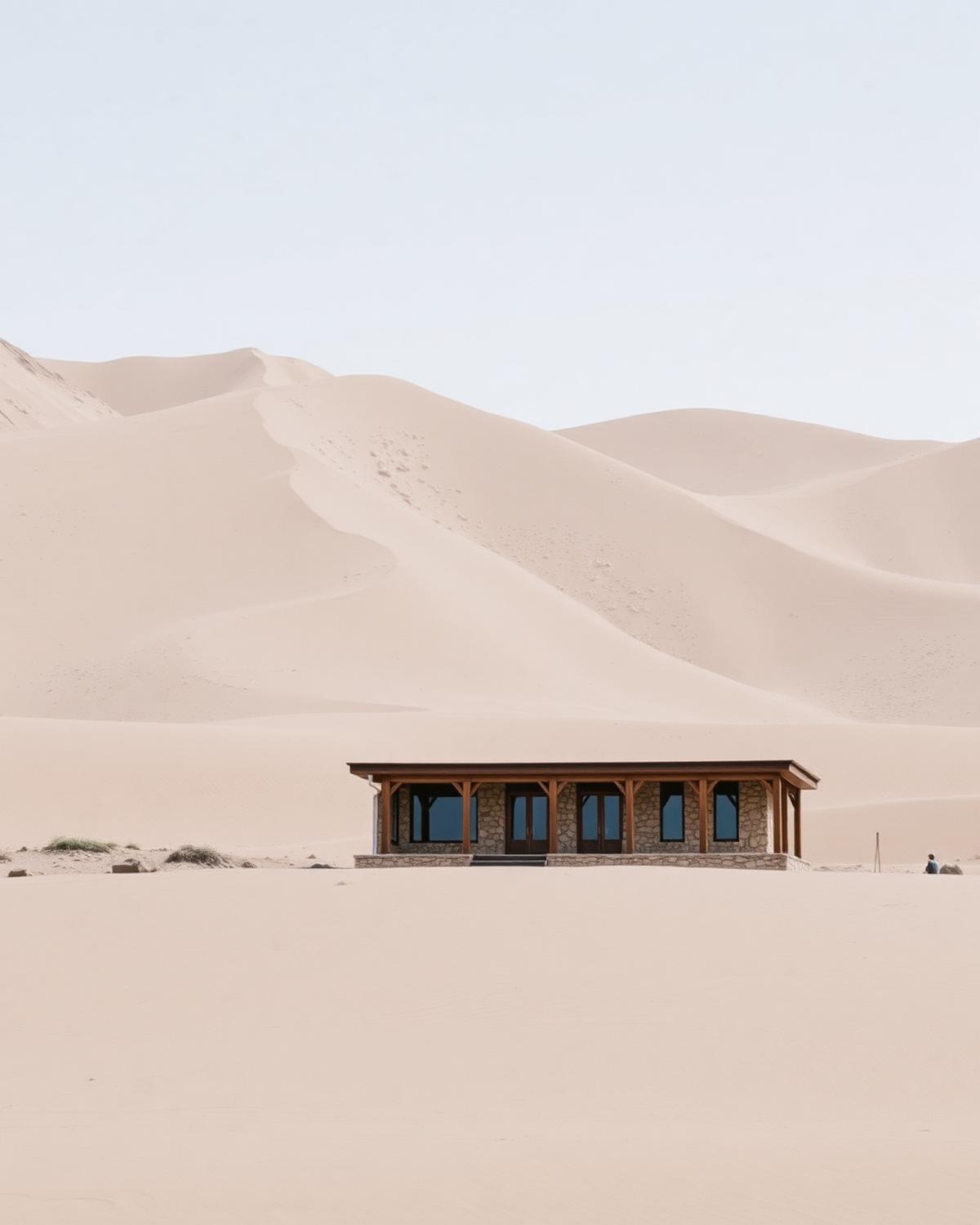
Sixteen air-conditioned rooms at Katpana, breakfast from six, and a front desk that knows what the road did this morning.
See the rooms and ratesGetting around
Summer days out of Skardu, and the hour that makes each one work
Drive times are from our gate at Katpana and describe a normal summer road day, not a best case. The last column is the summer-specific part.
| Place | Approx. travel time | Why go |
|---|---|---|
| Katpana cold desert | 10 minutes | First light or the last hour only. The sand is genuinely hot by eleven — the name describes the winter, not July. |
| Upper & Lower Kachura | About 30 minutes | The one place the heat is an asset. Be there by half past seven to have it quietly; the coaches arrive around eleven. |
| Sarfaranga cold desert | About 40 minutes | Wide open and best in the final hour of light. Jeep rally country in October, empty most summer evenings. |
| Shigar Valley & Fort | About 1 hour | Lower than Skardu and hotter for it. Do it early, and give the old mosques the cool part of the morning. |
| Manthoka Waterfall, Kharmang | 2.5 to 3 hours | At its strongest of the year — summer snowmelt is what feeds it. Much thinner by autumn. |
| Basho Valley | 2 to 3 hours | The escape from the heat: forest and meadow at 3,000–3,600 m. Metalled to the bridge, then 4x4 only. |
| Deosai (Bara Pani) | 2.5 to 3 hours | The only months it is open. Leave before six, take a warm layer, and treat it as a whole day. |
| Khaplu & the Shyok valley | About 3 hours | Earns its own night rather than a day trip. Do not try to pair it with Shigar. |
Guest feedback
What guests actually say
We don't publish a star score of our own, because the only ratings worth reading are the ones we can't edit. Reviews for Arcadian Resort Skardu live on the booking platforms below, written by guests who paid for their rooms. Read them there, including the critical ones.
Location
Where Arcadian Resort actually is
Arcadian Hotel & ResortKatpana Road, Katpana, Skardu 15100
Gilgit-Baltistan, Pakistan 15100
0310 0973119
Arcadian Resort sits in Katpana, on the quiet side of Skardu: roughly ten minutes from Skardu Airport, ten minutes from the Katpana cold desert dunes, and fifteen to twenty minutes from the bazaar and Kharpocho Fort.
How we know this
Temperature and rainfall figures are the Pakistan Meteorological Department's Climate Data Processing Centre normals for 1961–2009, and we say so rather than passing them off as current readings. Deosai's elevation and protected status come from the Gilgit-Baltistan government; no authority publishes an opening date, so we do not invent one. The GLOF and monsoon guidance is drawn from the National Disaster Management Authority's own published alerts rather than from other travel sites. Crowd patterns, road surfaces, the hour the coaches reach Kachura and what a given July week actually feels like come from our own staff and drivers and from guests reporting back the same day, which is why they are written as ranges rather than fixed times. Where no authority publishes a figure, we say so plainly.
Reviewed: Each summer, and whenever the Deosai road, the Baltistan Road or Babusar Pass changes status.
Written and checked by the team that runs the house in Katpana, Skardu — the people who watch the Deosai road open and close, book the drivers, and answer the phone at midnight. Our editorial standards.
Sources
Where the figures come from
- Pakistan Meteorological Department climate normals for Skardu, 1961–2009 ↗
- Source for the June, July and August temperature and rainfall normals, credited to PMD's Climate Data Processing Centre.
- Government of Gilgit-Baltistan — Tourism Department, Deosai ↗
- Source for the 4,114 m average elevation and the statement that Deosai is accessible only in summer. No opening date is published.
- Forest, Wildlife & Environment Department, Government of Gilgit-Baltistan — Deosai National Park ↗
- Official park page. Carries no access season, no opening or closing dates and no entry tariff.
- National Disaster Management Authority — GLOF alert for Gilgit-Baltistan and KP, 4 July 2025 ↗
- Source for the seasonal glacial lake outburst risk and the advice issued to tourists.
- Dawn — Babusar Road reopens to traffic after seven months ↗
- Source for the 24 May 2025 reopening, the seven-month seasonal closure and the glacier clearance on the Naran side.
- Babusar Pass ↗
- Source for the elevation of the pass.
- S-1 Strategic Highway (the Baltistan Road) ↗
- Source for the 167 km Juglot–Skardu length, the 2021 upgrade and the tunnels left out of it.
- Skardu International Airport ↗
- Source for the airport's terrain-constrained, visually flown approaches.
Questions
Practical questions about Skardu in summer
Yes, with conditions. Summer is the only reliable window for the Deosai plateau, every side valley road is open, and Pakistani school holidays make it the one period many families can travel. The trade-offs are real: daytime highs of 31.6 °C in July on the valley floor, the busiest and most expensive weeks of the year, and a road in from Islamabad that passes through monsoon-affected terrain even though Skardu itself stays dry. If you have flexibility and Deosai is not essential, late September and October are quieter, cheaper and clearer.
Rooms & prices →Come early in the day, and summer looks after itself
A Skardu summer rewards people who organise around two things: the clock and the journey. Start your days at six rather than nine and you get the lakes, the dunes and the forts in the quiet hour and the good light, with the heat spent somewhere sensible in the middle of the day. Build a spare day around the flight, keep the road conditions in mind rather than the Skardu forecast, and the one genuine risk of the season is largely managed.
Arcadian Hotel & Resort is a sixteen-room house at Katpana, ten minutes from Skardu International Airport, with air-conditioned rooms, generator-backed power and breakfast from six for exactly these mornings. If you are working out which weeks of the summer to take, call or WhatsApp the front desk on 0310 0973119 — we will tell you what the Deosai road and the Baltistan Road are actually doing, including when the honest answer is that you should come in October instead.
Keep reading