
01
What a True Boutique Claim Means in the Karakoram
“Boutique is not a question of simply having fewer rooms; it is a firm, undeniable claim about local authorship.”
Boutique frequently stretches to mean anything with fewer than fifty rooms. We prefer a more rigorous definition. Authorship remains our core metric. It means a specific person made a decision, rather than a remote procurement committee choosing from a central catalogue. At our property, authorship stays local, deeply rooted in the geography of the heavy northern mountains. Every architectural pattern matters here.
Early on, we decided that the architecture had to reflect the valley rather than ignore its harsh realities. Corporate hospitality favours absolute uniformity because it is cheap to maintain. A broken chair in a chain hotel gets replaced with a unit shipped from afar. Here, an object exists because somebody in this region cut the heavy wood. We reject that standard monotony.
Control alters how a building feels. You notice it in the heavy weight of the doors, the rough grain of the floorboards, and the way morning light falls across the textiles. The decisions made here are deliberate, anchored in the geometry and volatile climate of the Skardu valley, creating spaces that feel permanent. They stand as a quiet rebellion against mass construction and cheap materials.
02
Stone, Apricot Timber and a Hard Winter Build
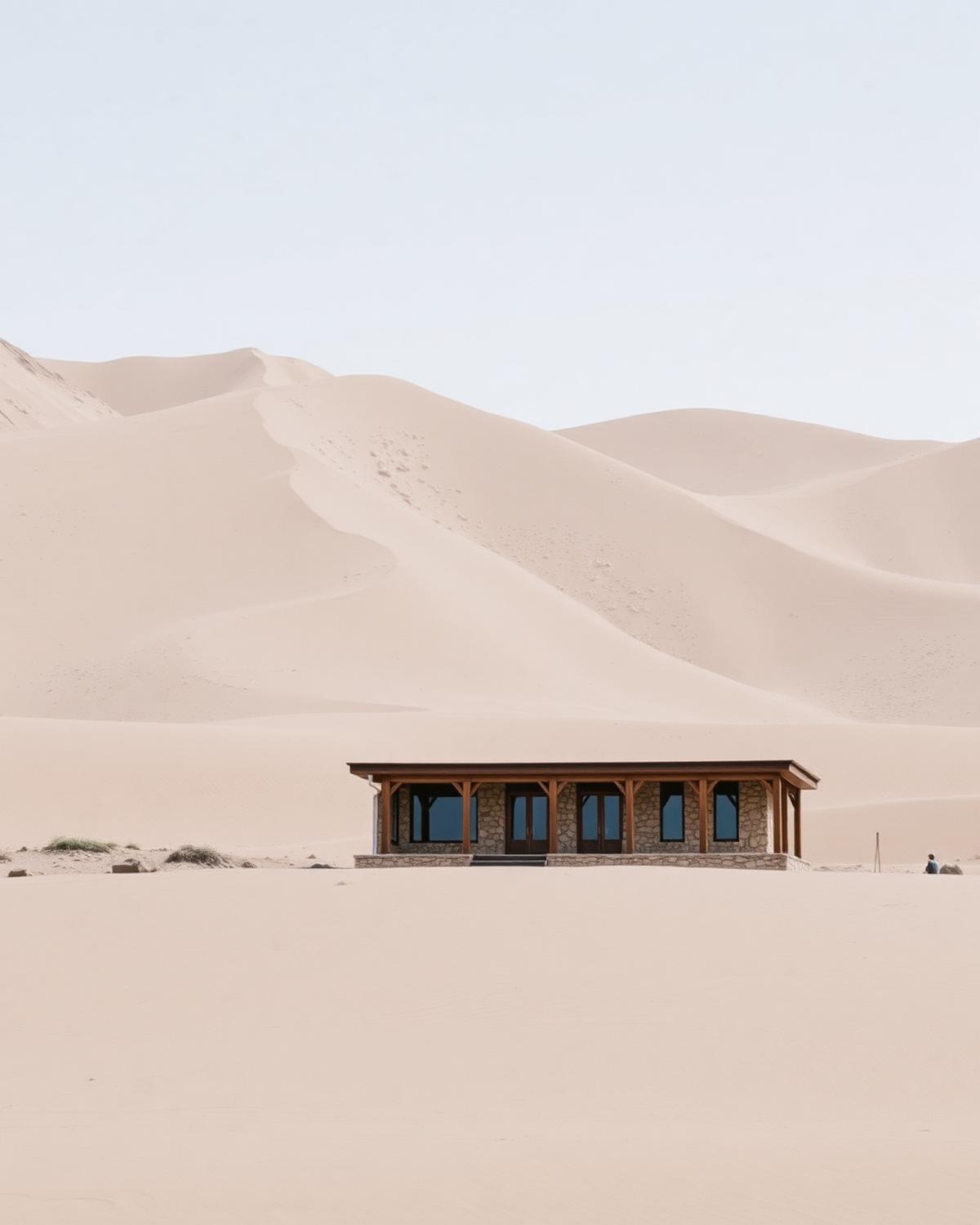
Concrete is fast, cheap, and devoid of character. We chose to build with heavy stone instead. Sourcing river rock and quarried blocks demanded immense time, but it gave the walls a thermal mass modern materials cannot replicate. The thick stone holds the bitter chill of the night outside and keeps the interior insulated against the sharp valley winds. You can touch the masonry and feel its density.
Timber formed the next vital component of our structure. Apricot wood is native, hard, and carries a deep, complex grain. We applied it alongside local walnut, negotiating directly with suppliers who understand how these woods behave at 2,230 metres. You cannot rush heavy timber. It must cure slowly, expanding and contracting with the dry mountain air. Its earthy scent still lingers throughout our quiet hallways.
Harsh winters dictated our construction schedule. Temperatures in Skardu drop below freezing by late December, turning the earth rigid and unyielding. Working through that bitter season meant the building was hardened by the climate it was designed to withstand. The local men who raised these thick walls understood what the structure required. Their expertise sits quietly in every joint and beam we placed.
The Anatomy of the Build
- Foundation
- Heavy quarried river rock pulled locally.
- Primary timber
- Native apricot and local walnut wood.
- Climate response
- Thick walls built for extreme thermal mass.
- Altitude
- Wood cured specifically for 2,230 metres elevation.
03
Preserving the Balti Carpentry Tradition
Raw wood emits a sharp scent long before you examine the joints. Balti carpentry relies on an inherited understanding of friction, weight, and interlocking tension, rather than driving iron nails into flat planks. The older craftsmen in the valley still cut and shape heavy timber by hand, ignoring the faster power tools that leave a sterile, uniform edge. We brought these men in to shape our spaces.
Wooden panels in the common room display this philosophy of construction. Each piece required a carpenter to judge the grain and cut accordingly. This approach accepts minor imperfections as proof of human labour. A machine cuts a straight line, but a human hand leaves a slight variance that gives the room its authentic texture. You can see the subtle tool marks if you look closely.
Supporting local workshops keeps regional knowledge alive. When hotels import flat-pack furniture from the southern plains, the generational trades in Gilgit-Baltistan slowly starve. By commissioning beds, heavy tables, and thick window frames from Skardu carpenters, we ensure the local economy benefits from your stay. The money remains within the valley, circulating among the resident families. It is a quiet but vital economic decision.
The Reality of Hand Tools
Machine precision feels sterile in a mountain environment. The slight deviations left by a traditional handsaw ground the furniture in reality, reminding you of the human effort involved.
04
Woven Colour and the Things We Left Out
Hotel rooms frequently look identical regardless of which continent you wake up on. We rejected that sterile neutrality. Instead of painting everything white and beige, we brought in the deep, saturated reds and earth tones native to Baltistan. The cushions and textile throws carry patterns that have existed in regional weaving traditions for decades, dyed with natural pigments. They provide visual warmth against the heavy grey stone.
Decisions about what to keep out are just as important as what we brought inside. You will not find generic abstract art prints bolted to our walls. We refused to lay down synthetic, static-heavy carpets that trap dust and muffle the acoustics poorly. The architecture is allowed to speak for itself, relying on the natural texture of raw materials. Deep silence and empty space are the real luxuries here.
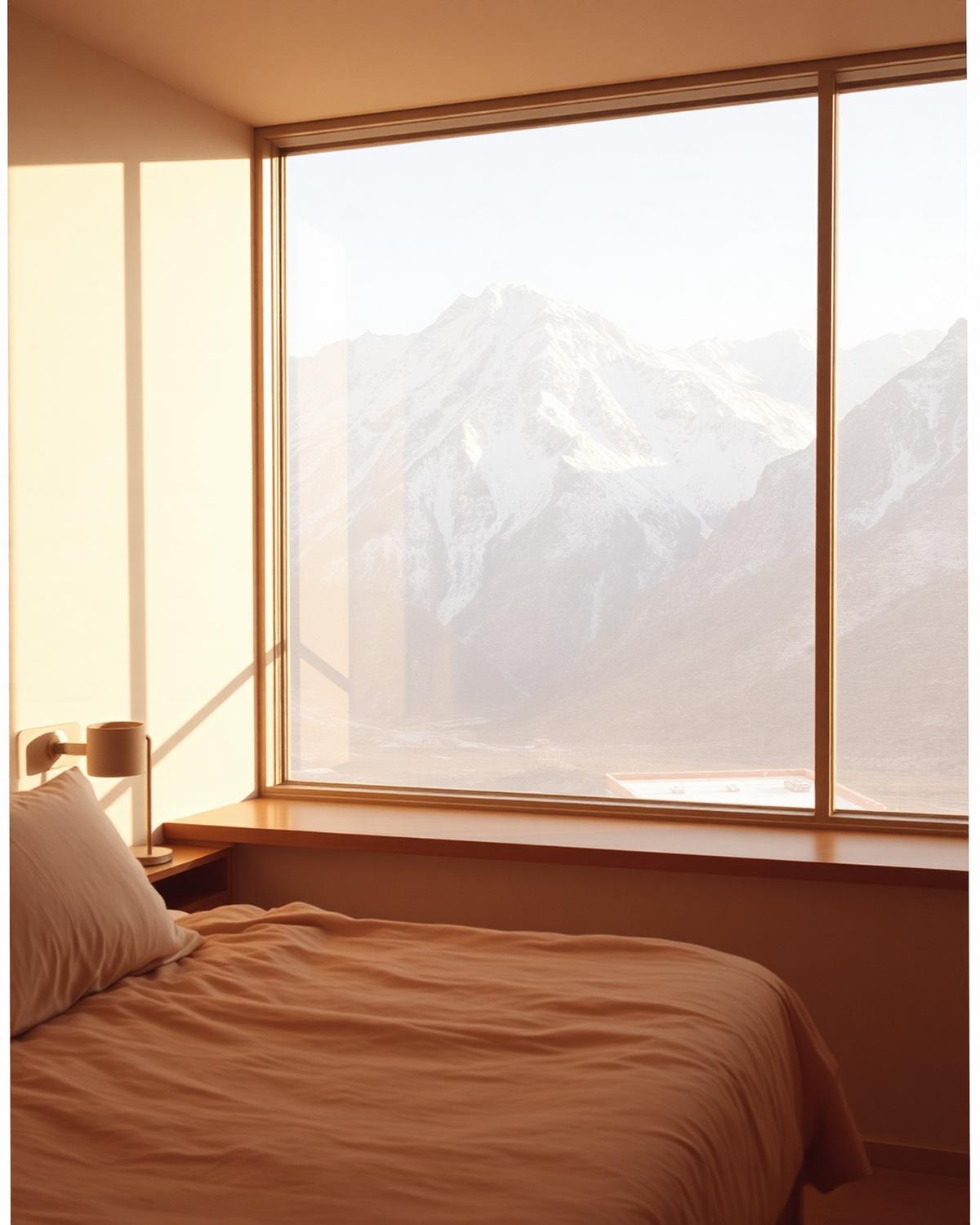
Stripping away clutter forces you to look outside. The windows frame the harsh, compelling landscape of the cold desert and the surrounding Karakoram peaks. By removing unnecessary decorative additions, the room becomes a calm, deliberate vantage point. You are always aware of where you are, rather than feeling isolated in a sealed, artificial environment. This is accommodation that respects its dramatic natural context.
05
Sixteen Rooms and Sixteen Separate Decisions
Constructing at a modest scale means you cannot standardise every corner. We maintain 16 rooms, allowing us to make individual structural choices for each space. The morning light hits the eastern windows differently than it strikes the western facade in the late afternoon. Because the rooms follow the logical shape of the building, no two are identical. We allocated the spaces based on the best views.
We keep just two room types, and each was designed with a clear purpose. The Economy Single Room is compact and simple, built for a solo guest who wants a clean bed, free Wi-Fi and nothing more. These rooms stay cool during the intense summer afternoons and are priced to suit a shorter, simpler stay.
The Deluxe Double Room is the more generous of the two, with one double bed, a private balcony facing the lake, air conditioning and its own dining area. We only hold back a few of these, so whether you need a simple base for trekking or a proper room with a view for the evening, the house accommodates your rhythm. You choose the room that suits your journey.
Choosing Your Sightline
Limiting our capacity to sixteen rooms means we can discuss what you need before you arrive. Whether you prefer the garden access or high mountain views, we accommodate.
Secure your preferred room directly with us today.
View our rooms06
Reading the Valley Through Our Kitchen
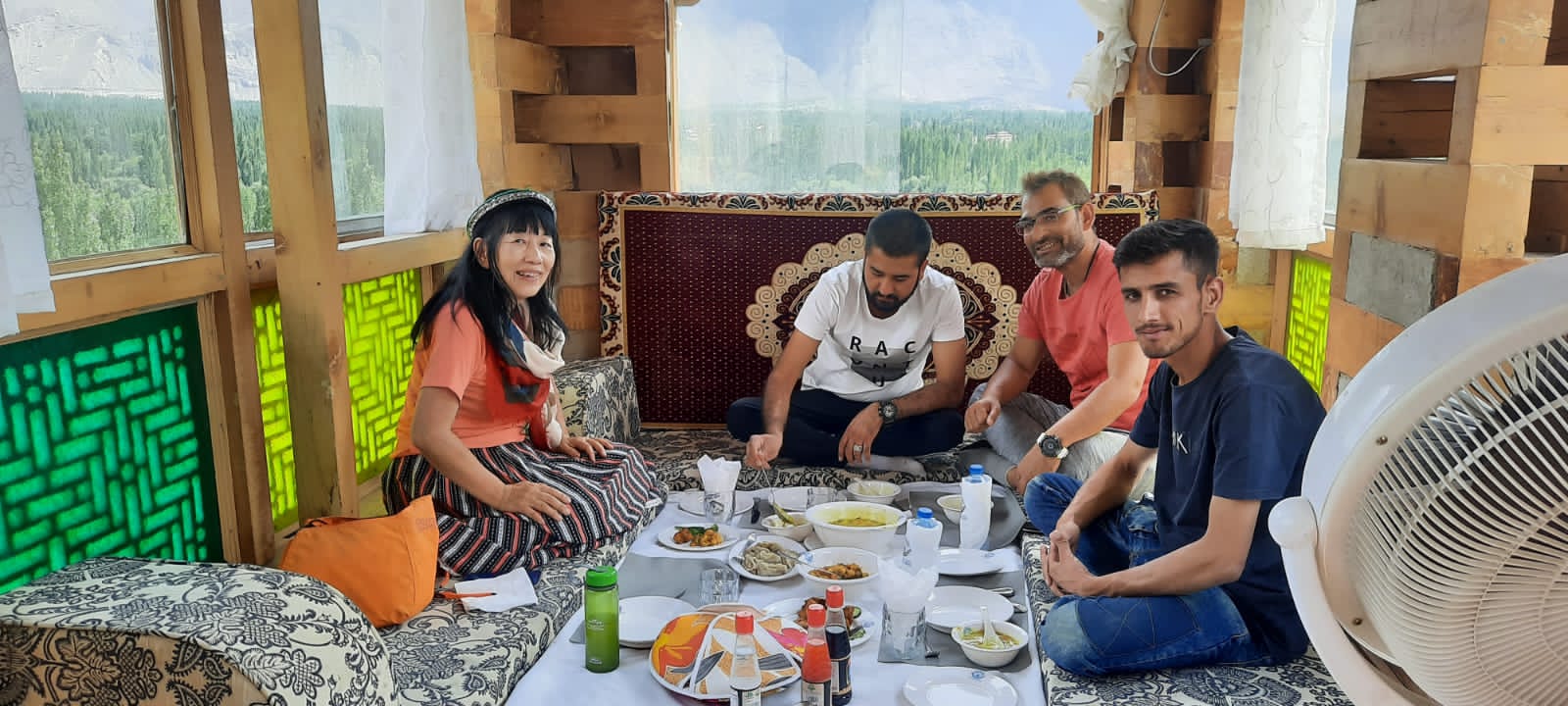
Menus operate as a living cultural document. While we do serve standard Pakistani dishes and simple continental food for those who require the familiar, the true focus remains our Balti cooking. The kitchen relies on the ingredients that grow in the rough soil outside. Garden vegetables dictate the evening options, shifting naturally as summer progresses. We refuse to force imported produce onto our plates.
Mamtu remains something you must try at least once. These large steamed dumplings, filled with seasoned meat and chopped onions, provide the dense calories you need after walking through the Katpana dunes. We also prepare traditional prapu, thick wheat noodles coated in a rich, dark walnut paste. It is a heavy dish designed to sustain local farmers. It tastes unlike anything you will find further south.
Lighter options include our apricot soup, which balances sharp acidity with subtle sweetness, using the fruit that defines the region. The kitchen pairs this with freshly baked walnut bread, brought still steaming to the table. Hot tea flows all day, a constant necessity at altitude. The dining room fills with low, steady conversation long after sunset. It is a warm space built for slow, communal recovery.
Kitchen Signatures
- Mamtu
- Heavy steamed meat and onion dumplings.
- Prapu
- Thick wheat noodles in crushed walnut paste.
- Apricot soup
- A sharp, sweet regional specialty bowl.
- Walnut bread
- Baked fresh and served warm daily.
07
The Language and the Calendar of the Valley
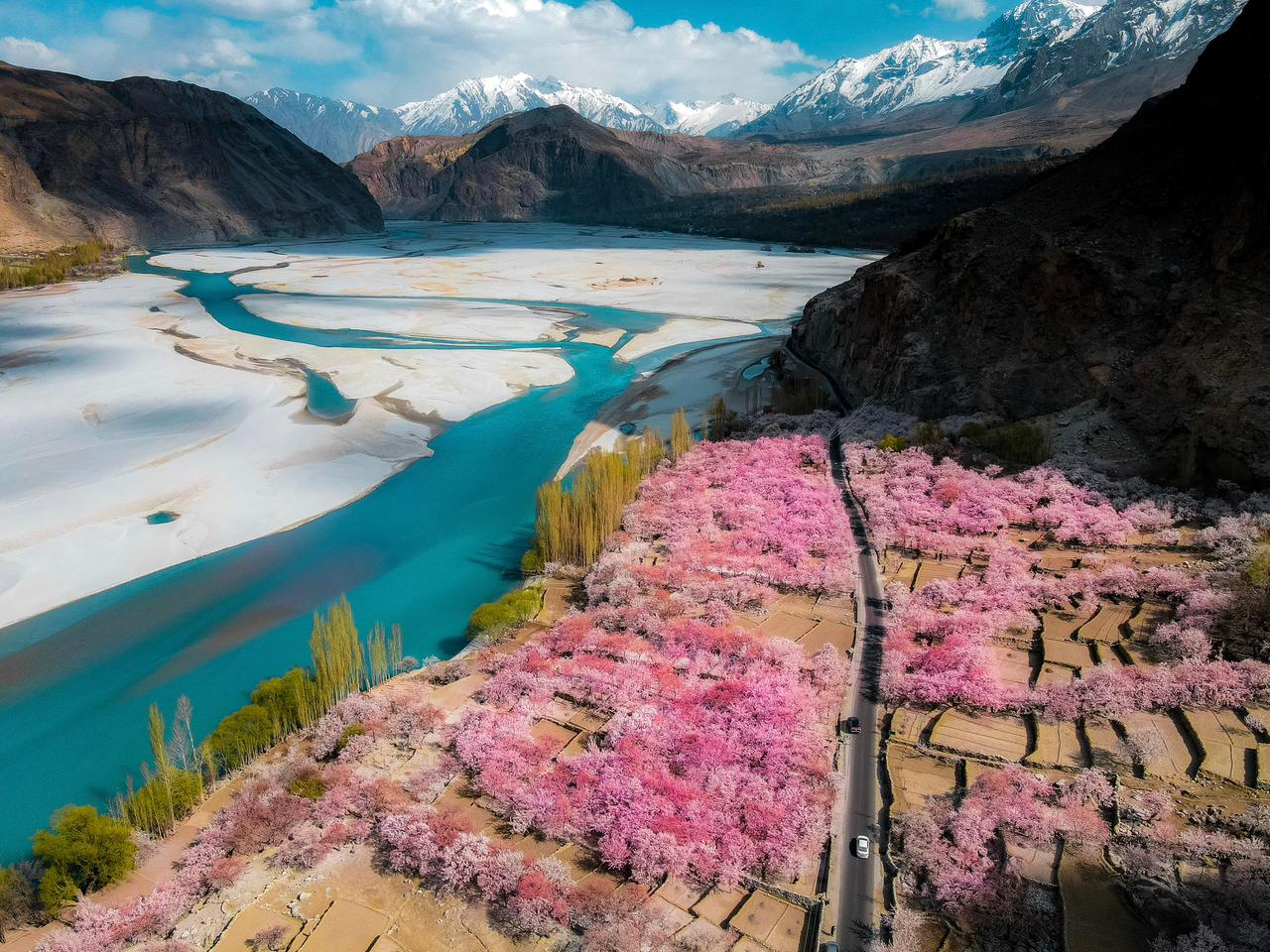
January does not mark the real start of the year here. The valley operates on a different rhythm, dictated by the shifting ice and the high sun. Nowruz marks the true beginning, the spring equinox when the grip of the freeze breaks. Shortly after, the apricot blossoms erupt in violent, sudden white across the lower slopes, drawing people outside. It is a brief, intense period of regional renewal.
Spring arrives fast, and from April to October, the main tourist season runs hot. The skies clear, and the overland route from Islamabad opens, bringing a vital flow of travelers. By November, the bitter cold returns sharply. Winter is brutal, silent, and isolating. The commercial flights cancel frequently, and the heavy snow dictates who can travel safely. We respect these hard climatic limits rather than fighting.
Language forms the constant undercurrent of all these seasonal shifts. You will hear Balti spoken in the corridors, a sharp, ancient Tibetan dialect that carries the history of the mountains. Taking a moment to learn a few basic greetings changes how the valley responds to you. It signals a quiet respect for the host culture. The small linguistic effort is always noticed and appreciated locally.
08
Ten People and No Corporate Scripts
Corporate hospitality relies on laminated scripts. A manager in a distant head office writes down how a guest must be greeted, removing all human spontaneity from the exchange. We hire good, capable people and allow them to speak naturally. When you ask the front desk a question, you get an honest opinion rather than marketing. It is a much more respectful way to communicate.
Ten individuals cover everything required to keep the house functioning at altitude. The owner-host commands the daily rhythm, supported by front desk staff who track the incoming regional flights. Three individuals manage the hot kitchen, three handle the daily housekeeping, and the rest maintain the grounds. You will quickly learn their names and roles. There is nowhere to hide in a team this tight.
Unscripted advice means the information you receive is practical. The staff know when the road to Shangrila forms a bottleneck, or how the wind picks up by mid-afternoon. If a weather front is moving in to block the Deosai pass, they will tell you to alter your driving plans. This raw, ground-level intelligence is what our capable, experienced boutique team provides every day.
Continuous Support
Midnight arrivals happen often, meaning our front desk remains staffed twenty-four hours a day. We understand that mountain travel rarely follows a schedule, so someone is always awake.
09
The Rough Edges a Chain Hotel Would Sand Away
Mass brands aim for friction-free monotony, insulating you from the outside environment. We have not smoothed everything out, because attempting to do so here requires fighting the landscape. The hot water runs reliably in the early morning, but if you demand a boiling bath at two in the afternoon, you might need to wait. The infrastructure at this altitude possesses its own stubborn limits.
Electricity in Gilgit-Baltistan fluctuates. We operate a heavy generator backup to keep the lights and essential systems running, but occasional brief cuts are a reality of mountain living. Rather than pretending this is a sealed urban environment, we adapt to the grid. In October, we fire up the wood-burner in the common room to dry the air. You learn to sit near the fire and wait.
Thick bedding in every room and electric heating exist to combat the freezing nights. However, we do not possess a spa, a swimming pool, or a commercial gym. We offer clean laundry service, reliable Wi-Fi, and a solid roof. Admitting these trade-offs is vital. If you require urban luxury, you will be frustrated. If you accept the local friction, the emotional rewards are immense.
10
Polo Grounds, Markets and the Fabric of Skardu
Enduring the long overland route to stay indoors makes little sense. The Katpana Cold Desert sits on our doorstep, accessible within ten minutes. However, the true pulse of the region lies in the Skardu bazaar and the rough dust of the local polo grounds. Spending an afternoon watching a match reveals the fast-paced local intensity. The loud shouts and rapid drumming echo off the steep rocks.
Vehicles are necessary to comprehend the scale of this terrain. Satpara Lake takes roughly twenty-five minutes of driving, while the orchards of Shigar and the dunes of Sarfaranga demand three-quarters of an hour. For the empty expanse of Deosai National Park or the historic stone passages of Khaplu, you must hold two hours. We can arrange a reliable local car and an experienced mountain driver.
Local workshops in the main bazaar require a visit before you leave. The craftsmen who shaped our wooden panels and stitched our cushions sell their work from tiny, cluttered shopfronts. Buying from them sustains the cultural fabric that makes this valley so compelling. It ensures that the next time you return, the skills will still exist. The high mountains demand respect, but the trades demand support.
Speak to our team about arranging your local driver.
Call us on WhatsAppQuestions
Understanding the House and the Region
Distinction lies in authorship and intention. A small property might have fewer rooms while still buying generic, mass-produced furniture and following a rigid, sterile corporate operating manual. A true boutique space is built around specific human decisions. It reflects its geography through heavy local stone, native apricot timber, and striking regional textiles. Every corner shows evidence of human craft rather than machine precision. When you walk into the room, you know exactly which valley you are standing in, because the architecture refuses to be neutral.
Rooms & prices →Planning Your Time in Skardu
April opens the main season in Gilgit-Baltistan, which runs until the heavy cold returns in October. Flights from Islamabad remain weather-dependent, and sudden cancellations are a reality of mountain travel. If you choose the overland route along the Karakoram Highway, prepare for twenty hours of driving split across two exhausting days. Always hold at least one unallocated day in your itinerary to absorb inevitable delays.
Securing a room requires looking past the massive concrete blocks and staying somewhere built with regional intention. We manage bookings directly to ensure you receive accurate advice on road conditions before you pack your bags. Call or WhatsApp our front desk at 0310 0973119 to check availability, secure your dates, and begin organizing your approach to the valley.
Keep reading