
01
What autumn actually does to the valley
Three months that behave nothing like each other.
Autumn in Skardu is not one season but three quite different months, and treating them as interchangeable is how people end up packing wrong. The Pakistan Meteorological Department's station normals give September a mean daily high of 27.2 °C and a low of 11.4 °C. October drops to 20.4 °C and 4.3 °C. November falls again to 13.2 °C by day and −1.9 °C at night — a fall of fourteen degrees in daytime highs across ten weeks, and thirteen at night.
Read the second column, not just the first. The daytime figures make October sound like a mild English summer, which is roughly what it feels like in the garden at noon. The night figures are the ones that matter: by late October you are going to bed in near-freezing air, and by November the valley floor is below zero every night.
Rainfall is the other half, and the strongest argument for coming. The same records give September 9.3 mm, October 7.3 mm and November 5.6 mm — the driest stretch of the entire year here, against 16.3 mm in December. Dry air in a high valley means long sightlines, and the Karakoram is visible in October in a way it simply is not through the summer haze. One caveat: those normals end in 2009, and they run warmer than the big consumer weather sites, one of which admits its Skardu data is satellite reanalysis rather than observation. Treat all of it as a range.
Skardu autumn, by the station record (PMD, 1961–2009)
- September
- Mean high 27.2 °C, mean low 11.4 °C. Rainfall 9.3 mm.
- October
- Mean high 20.4 °C, mean low 4.3 °C. Rainfall 7.3 mm.
- November
- Mean high 13.2 °C, mean low −1.9 °C. Rainfall 5.6 mm.
- Valley floor snow
- Not normally expected before December. Passes and plateaux go far earlier.
- Altitude
- Roughly 2,230 m at the airport and valley floor, rising toward 2,500 m across the wider valley.
02
The gold, and when it actually happens
Skardu turns about a week after Hunza. Nobody can give you the date.
“Plan a window, not a date. The turn moves with the year.”
There is no forecast for this. Gilgit-Baltistan has no phenological service and no foliage tracker, so everything you read about it — including this — is observation rather than prediction. What the observations agree on is the sequence: colour appears first in the high pastures above about 3,500 metres in late September, Nagar and upper Hunza follow and peak around mid-October, and the Skardu basin and the Shigar valley come last, generally in the final third of October, roughly seven to ten days behind Hunza.
The trees doing the work are poplar, willow, walnut and apricot. Skardu's version of autumn is the poplar stands along the Indus, planted in dense lines so they turn together and a whole riverbank goes from green to hard metallic gold within days. The apricot harvest is long finished; if you came for apricots you are two months late.
Plan a window, not a date. Book ten to fourteen days in the second half of October and you will catch it. Book a specific weekend and you are gambling, because the turn moves with the year and with altitude — Basho and the high side valleys colour and drop their leaves while the valley-floor orchards are still green. We are asked for a date every year and decline to invent one every year.
03
Deosai in autumn: the closure nobody can date
There is no published closing date. There never has been.
This is the part of a Skardu autumn that ruins itineraries, so we will be blunt. The Deosai plateau sits at an average of 4,114 metres, and neither the Gilgit-Baltistan Tourism Department nor the province's Forest, Wildlife and Environment Department publishes a single access date between them. The tourism department says only that it is accessible in the summers; the park's own official page carries no season, no dates and no tariff. The Balti name for the plateau, Ghbiarsa, translates as summer's place, which tells you how old this problem is.
The plateau does not close by decision. It closes when snow makes the access road impassable, on a different date every year — in practice anywhere between the first week of October and the first days of November, most often in the second half of October. We have seen guests cross it comfortably on the twenty-eighth and we have seen the road shut in the first week.
So the rule we give every autumn guest is simple: do not build an itinerary that assumes Deosai will be open after the first of October. If the plateau is why you are coming, come in September, when it is close to certain. If you are coming later, treat it as a bonus you might win rather than a day you have planned, and confirm locally within a day or two of travelling — not the week before, and not from a website. There is no live road-status feed for Gilgit-Baltistan. There is only somebody who drove it yesterday.
Our drivers run the Sadpara road while it is open and will tell you what it did this morning.
Call 0310 097311904
The driest month, and the flight that still might not fly
Clear air does not mean a reliable aircraft.
October is the driest month of the Skardu year and it is still no guarantee of getting here. Three carriers currently fly Islamabad to Skardu — Pakistan International Airlines, Airblue and AirSial, the last of which only began the route in May 2026 — and all three land at an airport where the approach is flown visually. There is no instrument landing system; the terrain does not permit one. The runways are long, at roughly 3,641 metres, but length is not the constraint. Cloud in the valleys is.
Autumn is better than spring and midwinter for this, and worse than the settled heart of the summer. We will not give you a percentage, because no airline or regulator publishes seasonal reliability figures for this route and anyone quoting one has invented it. Build two spare days around an autumn Skardu flight, not one, and never book a same-day onward international connection out of Islamabad.
Know the road fallback before you need it. The Baltistan Road from Juglot on the Karakoram Highway runs 167 kilometres and was rebuilt and reopened in December 2021, cutting the drive from around ten hours to roughly four — but the tunnels originally planned were left out, so it remains exposed to landslides and does get blocked. One autumn-specific detail: the prettier Babusar Pass route sits at about 4,173 metres and generally closes with snow around mid-October, though no authority publishes a date for that either. In September it is usually fine, in October doubtful, and in November you route via Chilas.
05
Which autumn days work, and which quietly stop working
The low days last all season. The high ones do not.
Think about an autumn trip by altitude rather than by attraction, because altitude is what decides whether a day is still available. Anything near the valley floor runs the whole season. Anything that climbs stops working somewhere in October, and the higher it goes the earlier it stops.
The Kachura lakes are a low, easy half day and arguably better in autumn than in summer — the air is still, the water goes to glass, and the crowds that make Shangrila difficult in July have gone home. The Katpana cold desert is ten minutes from our gate and works right through, though the light is the point, which means the first hour after sunrise or the last before dusk. Shigar Fort is at its best in late October with the poplars turned. Manthoka runs thinner than in high summer because the snowmelt feeding it has dropped away.
What stops working is Deosai and the high side valleys. Basho is the clearest case: forty to forty-five kilometres, paved as far as the Basho bridge and then eight to ten kilometres of rough jeep track that needs a 4x4 and takes far longer than the distance suggests. The meadows sit around 3,000 to 3,600 metres, so they take snow well before Skardu does — September is good, early October workable if it has been dry, and from November it is shut. For anyone travelling with children or older parents, autumn is quietly the best season here precisely because the low days are the good days.
06
Packing for a fourteen-degree swing
The packing error is almost always the same one: people dress for the daytime figure they read and freeze from four in the afternoon onward. In October you are dressing for 20 °C at noon and 4 °C after dark, on the same day. Layers are not a suggestion here, they are the whole strategy.
Bring a properly insulated jacket rather than a fleece, a hat and gloves for late October and November, and shoes that cope with dust and gravel. The sun at this altitude is fierce even when the air is cold, so sunglasses and sunscreen matter more in October than they feel like they should. Bring a power bank for the valley's outages, more cash in rupees than you think — ATMs outside Skardu town are unreliable and gate fees are collected in cash — and keep a warm layer in the car, because every good autumn day ends after sunset.
07
How an autumn week runs from Katpana
Sixteen rooms, a heated house and breakfast from six.
We sit at Katpana on the western edge of Skardu, roughly ten minutes from Skardu International Airport and the same again from the cold desert dunes. Sixteen rooms across two room types, and a team of ten who run the house through the year — which is the only real advantage we have over a guidebook, because the drivers come back each evening and say what the road was like.
Autumn is the season the house is built for. The rooms are heated and the hot water is reliable, which stops being a luxury around the third week of October. Breakfast runs from six so anyone heading for Deosai while it is still open, or out to the dunes for first light, is moving before the good hour is gone. One booking note: the second half of October is the busiest fortnight of the season here because it is when the colour arrives, and sixteen rooms is not many — if you are building a trip around the foliage, talk to us early.
Sixteen heated rooms at Katpana, breakfast from six, and a front desk that knows what the road did this morning.
See the rooms and ratesGuest feedback
What guests actually say
We don't publish a star score of our own, because the only ratings worth reading are the ones we can't edit. Reviews for Arcadian Resort Skardu live on the booking platforms below, written by guests who paid for their rooms. Read them there, including the critical ones.
Location
Where Arcadian Resort actually is
Arcadian Hotel & ResortKatpana Road, Katpana, Skardu 15100
Gilgit-Baltistan, Pakistan 15100
0310 0973119
Arcadian Resort sits in Katpana, on the quiet side of Skardu: roughly ten minutes from Skardu Airport, ten minutes from the Katpana cold desert dunes, and fifteen to twenty minutes from the bazaar and Kharpocho Fort.
How we know this
Temperature and rainfall figures are the Pakistan Meteorological Department's Climate Data Processing Centre normals for 1961–2009, and we say so rather than passing them off as current readings. We deliberately do not use the popular consumer weather sites for Skardu: one states on its own pages that its figures come from satellite reanalysis because the nearest reliable station is more than two hundred kilometres away, and it runs several degrees colder than the station record. Deosai's elevation and protected status come from the Gilgit-Baltistan government. Foliage timing, road surfaces and what a given week actually feels like come from our own staff and drivers and from guests reporting back the same day, which is why they are written as ranges rather than dates. Where no authority publishes a figure — the Deosai closing date is the clearest case, autumn flight reliability the second — we say so plainly instead of repeating a number from another travel site.
Reviewed: Each autumn, and whenever the Deosai road or the Baltistan Road changes status.
Written and checked by the team that runs the house in Katpana, Skardu — the people who watch the Deosai road open and close, book the drivers, and answer the phone at midnight. Our editorial standards.
Sources
Where the figures come from
- Pakistan Meteorological Department climate normals for Skardu, 1961–2009 ↗
- Source for the September, October and November temperature and rainfall normals, credited to PMD's Climate Data Processing Centre.
- Government of Gilgit-Baltistan — Tourism Department, Deosai ↗
- Source for the 4,114 m average elevation and the statement that Deosai is accessible only in summer. No closing date is published.
- Forest, Wildlife & Environment Department, Government of Gilgit-Baltistan — Deosai National Park ↗
- Official park page. Carries no access season, no opening or closing dates and no entry tariff.
- Skardu International Airport ↗
- Source for the runway length and the airport's terrain-constrained, visually flown approaches.
- S-1 Strategic Highway (the Baltistan Road) ↗
- Source for the 167 km Juglot–Skardu length, the 2021 upgrade and the tunnels left out of it.
Questions
Practical questions about Skardu in autumn
For most travellers, yes — arguably the best. October and November are the driest months of the Skardu year on the Pakistan Meteorological Department's station record, which means the clearest air and longest sightlines to the Karakoram you will get. The June-to-August domestic rush has gone home, so the lakes and forts are far quieter, and the poplars turn gold in the last third of October. The trade-offs: the Deosai plateau closes at an unpredictable point in October, and nights get cold fast — below freezing by November.
Rooms & prices →The season we would choose, if we were choosing
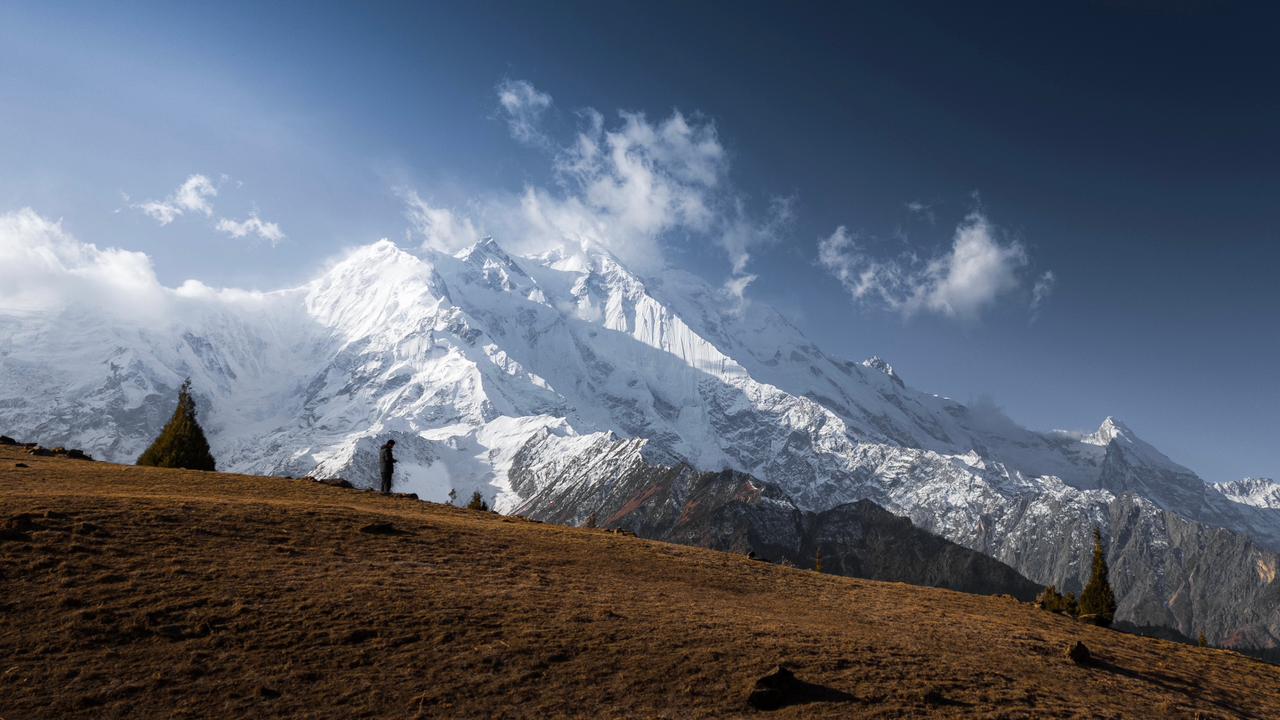
If someone asked us which fortnight of the year to spend in Baltistan and did not care about Deosai, we would say the second half of October without hesitating. The air is dry, the mountains are visible from the garden, the valley-floor roads are all open, the summer crowds are gone and the poplars along the Indus do the thing they only do for about two weeks. The cost is cold nights and a plateau that has probably closed — a trade most people would take if anyone told them it was on offer.
Arcadian Hotel & Resort is a sixteen-room house at Katpana, ten minutes from Skardu International Airport, with heated rooms, generator-backed power and breakfast from six for exactly these mornings. If you are working out which week of autumn to come, call or WhatsApp the front desk on 0310 0973119 — we will tell you what the leaves and the roads are actually doing, including when the answer is that you should come in September instead.
Keep reading