
01
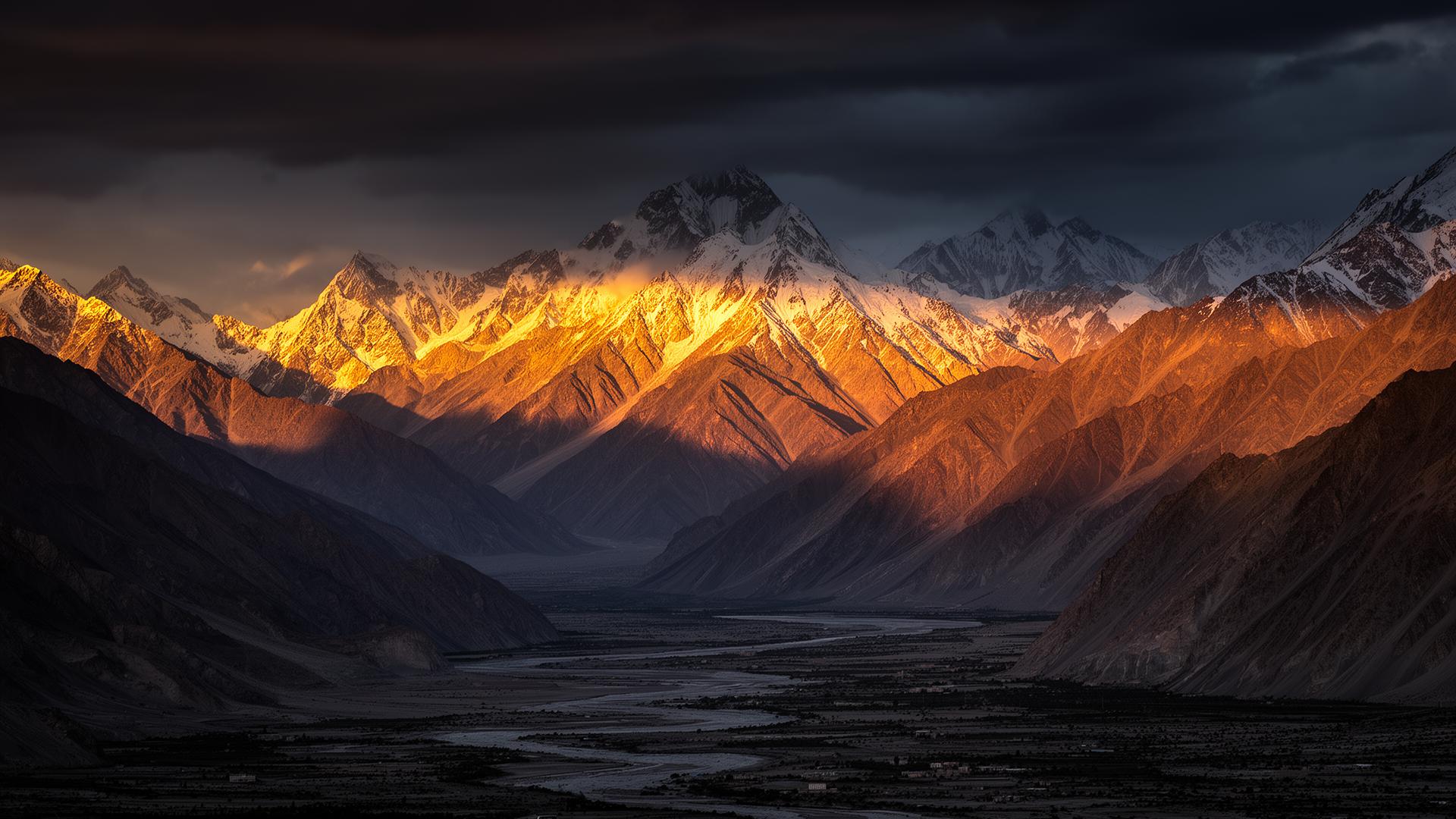
Skardu does not close. Half of what you came for does.
What actually stays reachable between November and February.
“The honest question is not whether Skardu is open, but what is still reachable and who is still working.”
The confusion starts with the word closed. Search for Skardu in December and you will find a great many pages saying the season is over, which is true of tour operators and untrue of the valley.
Skardu town runs all winter. The bazaar trades, the airport works when the weather allows it, the hospital is open, the schools run, and the Balti families who have wintered here for a thousand years are not going anywhere. What closes is the high ground and the tourism infrastructure built on top of it — the plateau roads, the seasonal camps, the lakeside cottages, most of the jeep operators, and a good share of the town's hotels.
So the honest question is not whether Skardu is open but what is still reachable and who is still working. Reachable in an ordinary winter: the valley floor, the Katpana and Sarfaranga dunes, the Indus banks, Kharpocho Fort, the Shigar road when it is clear, and — with a local driver and a look at the sky first — the Kachura lakes. Not reachable: Deosai, the passes, and anything that needs a trekking approach.
The second thing worth understanding is that this is a season with a different reason for being here. Nobody comes to Skardu in January for a packed itinerary. People come for the light, the silence, and the fact that they will have the dunes to themselves.
02
The temperature, and the honest version of the snow
Real figures for December, January and February — and why snow is a probability, not a promise.
Pakistan Meteorological Department climate normals put Skardu's December at a mean daily maximum of about 6.5°C and a mean minimum of about minus 5.6°C. January is the cold one: roughly 3.2°C by day and minus 8°C overnight. February recovers slightly, near 6.1°C and minus 4.4°C.
Those are averages, and averages flatter a winter. Cold snaps here reach minus 15°C and below; residents interviewed during one solstice described nights at minus 16 to minus 20°C. Plan around the averages and pack for the snaps.
Now the part most winter guides get wrong. Snow in Skardu is not reliable. Climatologically the snow season runs from around the second week of December to mid-March, with February the snowiest month on the record — but recent winters have behaved very differently from one another. In one, six inches fell across Skardu, Astore and Ghanche and blocked both the Karakoram Highway and the Baltistan road. In the next, the first snow of the season did not reach Skardu until mid-January, and then only two or three inches, with national reporting describing the mountains as bare and the season starting later, falling lighter and running warmer than usual.
If you are booking specifically to photograph deep snow, understand that you are booking a probability rather than a certainty, and that the probability has been getting worse. If you are booking for the light, the emptiness and the price, none of that depends on snowfall at all.
Skardu winter at a glance
- December
- Around 6.5°C by day, minus 5.6°C overnight (PMD normals).
- January
- Around 3.2°C by day, minus 8°C overnight — the coldest month.
- February
- Around 6.1°C by day, minus 4.4°C overnight, and the snowiest month on the record.
- Cold snaps
- Minus 15°C and below is not unusual on a clear night.
- Snow season
- Roughly 9 December to 15 March — but recent winters have started weeks late.
03
Getting here: the flight that may not fly, and the road that takes a day
Winter access, without the optimism.
Three airlines currently fly Islamabad to Skardu: PIA, Airblue and AirSial, the last of which opened the route in May 2026. On paper that is more capacity than Skardu has ever had. In practice, winter capacity is whatever the weather allows.
Skardu is a visual-approach airport. Pilots need visual contact with the terrain through the approach, and when cloud fills the valleys or visibility drops below limits, flights are delayed, diverted or cancelled outright. That is not a Skardu quirk; it is how a runway inside the Karakoram works. The UK Foreign Office puts it plainly in its Pakistan advice: flights to Gilgit and Skardu may be unreliable, may change at short notice, and are frequently cancelled in the mountains because of extreme weather.
The road fallback is long. Babusar Pass, the short summer route, is closed roughly November to June under snow, and its reopening date moves by weeks from year to year. Once Babusar shuts, the only road is the Karakoram Highway via Mansehra, Besham, Dasu and Chilas to Gilgit, then the Gilgit-Skardu road east. That last stretch is 167 kilometres, paved and widened by the Frontier Works Organization in 2021; the official line is three to four hours, and in winter you should budget five to seven and accept that snow can close it outright for a day or two.
One caution we would rather state than skip: the UK Foreign Office currently advises against all travel on the Karakoram Highway between Mansehra and Chilas via Besham. We are not going to pretend that advisory does not exist because it is inconvenient for a hotel to mention. Check your own government's current advice and make the road decision knowingly.
Four rules for booking a winter flight
Never put a same-day onward international connection out of Islamabad behind a Skardu flight — leave a night. Build a spare day at each end of the trip, two if you can. Book the earliest departure of the day, because morning weather is more often flyable than afternoon weather. And know your road fallback before you need it, rather than at the airport counter.
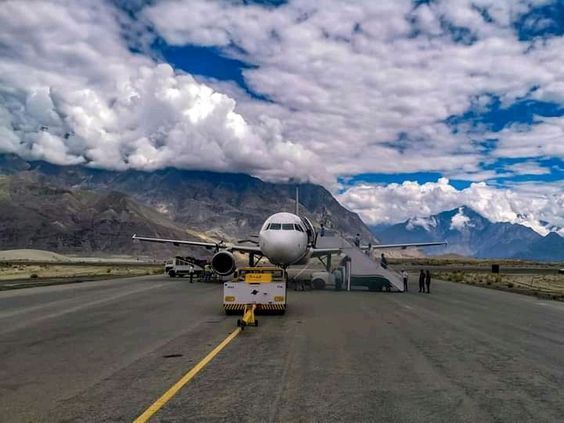
Tell us your flight number and we will meet it — and if it turns back, we will hold the room.
Call 0310 097311904
A winter map of the valley: what works and what does not
Where you can actually go between November and February.
Deosai is shut. The plateau sits at an average 4,114 metres and the Gilgit-Baltistan tourism department gives its accessible season as June to November. The Balti name for it, Ghbiarsa, means summer's place, because that is the only time you can get onto it. Do not let anyone sell you a winter Deosai trip.
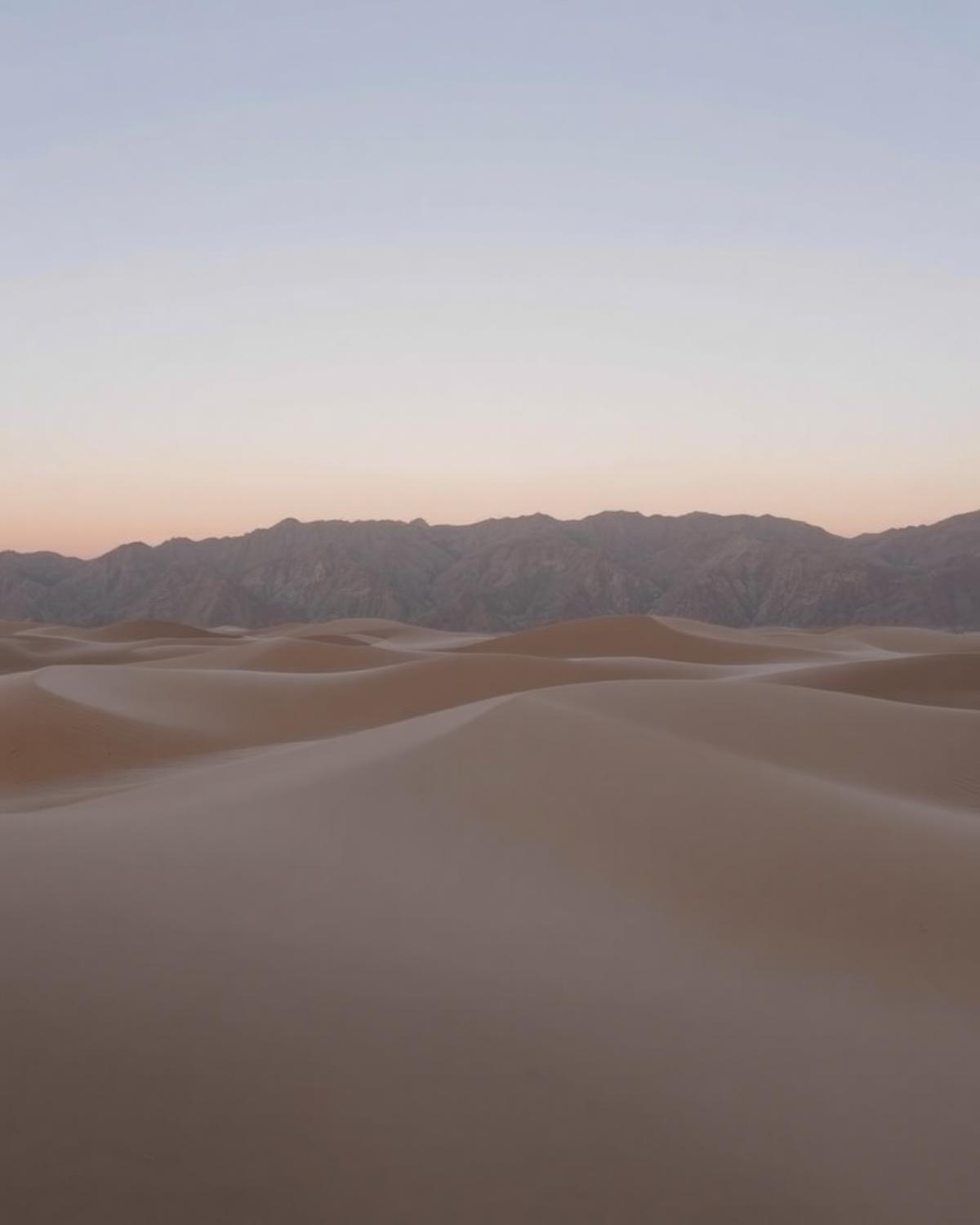
Katpana and Sarfaranga work, and they are the reason to come. The cold deserts sit on the valley floor minutes from us, and they are at their strangest in winter — sand and snow in the same frame with the Karakoram behind. Go at first or last light, and bring gloves you can still operate a camera in.
The Kachura lakes are a maybe, and you should ask before you drive. Upper Kachura sits at about 2,500 metres and, on the published record, its surface freezes solid in winter. What nobody publishes is whether the last stretch of road is clear this week or whether the resort at Lower Kachura is running, so treat both as a question for the morning rather than a fixture in the plan. If anyone tells you a frozen lake is safe to walk on, ignore them.
Satpara is close and quiet, and we will not tell you it freezes. It is a dam reservoir now, its level moves, and no authoritative source confirms the ice — photographs show partial cover in midwinter and that is as far as we are willing to go. The Shigar road, by contrast, is usually fine: flat valley floor for most of it, and Shigar Fort makes an indoor-and-courtyard sort of day that suits a cold one.
05
Power, heat and hot water: the part no travel blog covers
The single most important question to ask any Skardu hotel about winter.
“Eighteen to twenty-one hours of load-shedding is the number that decides your winter trip, and almost no guide mentions it.”
Gilgit-Baltistan runs mostly on run-of-river hydropower. In winter the rivers drop and freeze, generation collapses, and demand for heating peaks at exactly the wrong moment. Reporting from the last two winters puts daily load-shedding across the region at eighteen to twenty-one hours, with Skardu named among the worst-affected areas.
Eighteen to twenty-one hours. That is the number that decides your winter trip, and almost no guide mentions it.
What it means inside a hotel is that heating, hot water, lighting, Wi-Fi and phone charging all depend on whether the property has its own generation and is willing to run it. Plenty of Skardu hotels close for the winter precisely because running a generator for four guests does not pay. Others stay open and ration.
We run generator-backed power through valley outages, heating in every room and hot water before the morning flights, and the kitchen serves breakfast from six because that is when people leave for the airport. Winter is also the cheapest we are all year, which is the honest reason to come in January rather than July.
Four questions to ask any Skardu hotel before you book for December
Are you open through the whole period, or closing mid-season? What heats the rooms, and does it run when the grid is off? Is there hot water in the morning specifically, before an early flight? And do you have a generator — for how many hours a day do you actually run it? Vagueness on any of the four is your answer.
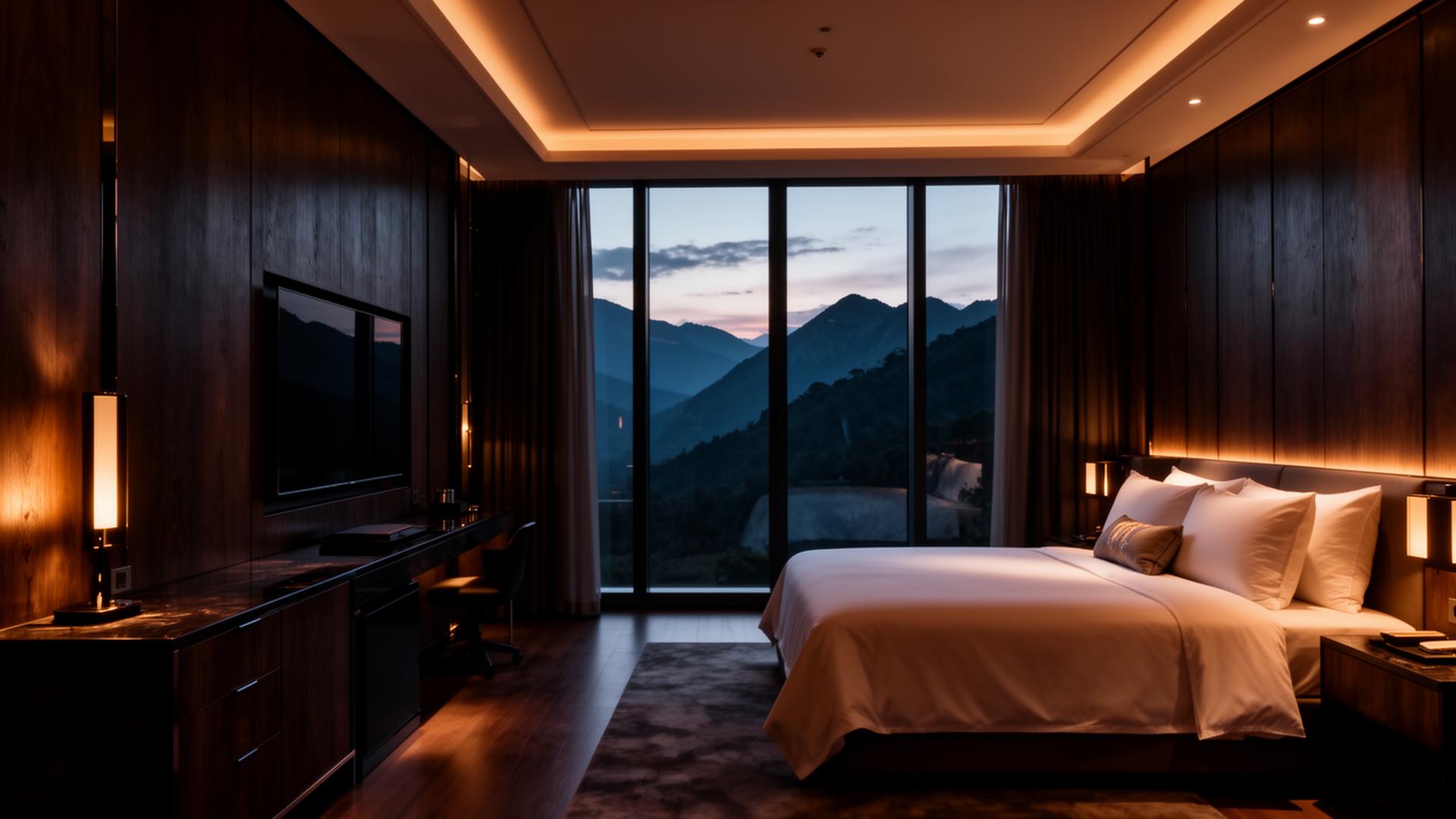
Sixteen heated rooms, generator-backed power and breakfast from six, right through the winter.
See the rooms and rates06
Mayfung, Losar and the winter that belongs to Baltistan
The one thing you can only see here between November and February.
On the night of 21 December, the longest night of the year, Balti families across Baltistan celebrate Mayfung — the festivity of waving fire and light at night. People carry burning wood down from the hillsides, light bonfires, swing fireballs and set candles along the rooftops across Skardu. It marks the turn into Losar, the Balti new year, and the belief carried with it is that fire keeps misfortune away through the dark months.
It is not a tourist event. It is a town doing something it has done for centuries while you happen to be standing there, which is a great deal better than a performance.
Separately, the Gilgit-Baltistan tourism department has in recent years run a winter sports festival in January — ice hockey, ice football, ice polo and skating, with events across Hunza and Skardu and a closing at the Hussainabad rink. Dates are announced each season rather than fixed, so ask at the front desk nearer the time rather than planning a trip around a date you read somewhere last year.
07
Packing, altitude, cash and signal
The practical layer, with the altitude advice corrected.
On altitude, most winter advice is wrong in an interesting way. Skardu Airport sits at about 2,230 metres, with the wider valley averaging nearer 2,500. The CDC puts the threshold for altitude illness in unacclimatised travellers at sleeping altitudes of 2,450 metres and above; the Wilderness Medical Society sets it near 2,500 while noting that susceptible people can be affected as low as 2,000. Skardu town sits at or just below that line, and you are unlikely to become properly ill here.
The real risk is the shape of the journey rather than the town. Flying from Islamabad at roughly 500 metres to Skardu in an hour is a fast ascent with no acclimatisation, and any onward height is where trouble starts. A headache and a poor first night's sleep are ordinary. Give the first day to nothing much.
Packing is layers rather than bulk: a thermal base, a fleece, a properly insulated outer, a hat that covers the ears, gloves, and boots with a sole that grips ice. A power bank, and then a second power bank. Lip balm and moisturiser, because the air here is desperately dry.
On cash: there are ATMs in Skardu, but they are few, they run out, and they depend on power and connectivity — both unreliable in winter. Bring more rupees than you think you need, from Islamabad, and do not assume a card will work anywhere. On signal: Zong has 4G in Skardu and coverage in town is generally workable, but coverage outside it is not, and the towers are subject to the same power problems as everything else. On permits: no NOC is required for ordinary tourism in Skardu district, the requirement for foreigners visiting Gilgit-Baltistan having been abolished in 2019. Restricted buffers near the Line of Control still apply, trekking and mountaineering permits are a separate regime entirely, and registering at police checkposts along the road is routine rather than a problem.
Guest feedback
What guests actually say
We don't publish a star score of our own, because the only ratings worth reading are the ones we can't edit. Reviews for Arcadian Resort Skardu live on the booking platforms below, written by guests who paid for their rooms. Read them there, including the critical ones.
Location
Where Arcadian Resort actually is
Arcadian Hotel & ResortKatpana Road, Katpana, Skardu 15100
Gilgit-Baltistan, Pakistan 15100
0310 0973119
Arcadian Resort sits in Katpana, on the quiet side of Skardu: roughly ten minutes from Skardu Airport, ten minutes from the Katpana cold desert dunes, and fifteen to twenty minutes from the bazaar and Kharpocho Fort.
How we know this
We run a sixteen-room hotel at Katpana and we stay open through the winter, so the operational detail here — what the generator covers, when hot water runs, what the road and the airport were doing that week — comes from our own season rather than from a tour brochure. Temperature figures are Pakistan Meteorological Department climate normals. The Deosai season, the Babusar closure window and the flight-reliability warning are taken from the official and government sources listed below. Where a figure is not published by anyone reliable — whether the Kachura road is clear this week, whether Satpara has frozen — we say we do not know rather than repeat a number from a blog.
Reviewed: Each November before the season, and after any road or airport closure.
Written and checked by the team that runs the house in Katpana, Skardu — the people who watch the Deosai road open and close, book the drivers, and answer the phone at midnight. Our editorial standards.
Sources
Where the figures come from
- Gilgit-Baltistan Tourism Department ↗
- Source for the Deosai plateau elevation of 4,114 m and its June-to-November accessible season.
- Pakistan Meteorological Department ↗
- Source for the Skardu monthly climate normals quoted for December, January and February.
- UK Foreign, Commonwealth & Development Office — Pakistan travel advice ↗
- Source for the flight-reliability warning, the seasonal Babusar Pass closure and the current advisory on the Mansehra-to-Chilas road.
Questions
Practical Questions About Skardu in Winter
Yes. Skardu is a working town rather than a seasonal resort, and it runs all year — the bazaar, the airport, the hospital and the schools all operate through winter. What closes is the high ground and the seasonal tourism built on it: Deosai National Park, Babusar Pass, the trekking approaches, most jeep operators and a good share of the town's hotels. The valley floor, the Katpana and Sarfaranga cold deserts and the Shigar road stay reachable in an ordinary winter.
Rooms & prices →Come in the quiet months
Winter in Skardu is not the trip for a first visit to Pakistan on a tight schedule. If you have eight days and one attempt, come between May and October, when Deosai is open and the flight is far more likely to leave. Winter is for the second visit — for photographers, for people who have had enough of other people, for couples who want a valley to themselves, and for anyone who has looked at July rates and July crowds and wondered whether there is another way to do this. There is, it costs less, and the light is better.
Bring the buffer days. Ask the heating question of whoever you book with. Carry cash. And accept the trade honestly: you are exchanging half the itinerary for all of the quiet. Arcadian Hotel & Resort sits at Katpana, ten minutes from Skardu International Airport, with sixteen heated rooms, generator-backed power and breakfast from six all winter. To check availability, ask what the road and the airport are doing this week, or arrange a driver, call or WhatsApp the front desk on 0310 0973119. For the weeks just before the snow arrives — the clearest air and the gold along the Indus — see our guide to Skardu in autumn.
Keep reading