
At a glance
Skardu food at a glance
- What the cuisine is
- Balti — a Tibetic food culture of barley, wheat, walnut, apricot, dairy and goat, closer to Ladakh than to Lahore.
- The four dishes to ask for by name
- Balay, prapu, mamtu and marzan. None of them will be on a printed menu.
- Notice needed
- Hand-pulled noodles and slow goat want 3–4 hours. Tell any kitchen, ours included, the day before.
- Spice level
- Mild by Pakistani standards. Cumin, black pepper, dried ginger — not chilli heat.
- The local fat
- Apricot kernel oil, pressed in the villages. It is the flavour visitors remember and cannot place.
- The local tea
- Namkeen chai — salted, buttered, pink-brown. Try it once; nobody is offended if you do not finish it.
- Vegetarian
- Workable but needs asking. Default assumptions in Baltistan are meat and dairy.
- Bazaar hours
- Most Skardu eating places close early. Plan dinner before 9 pm, earlier in winter.
- Payment
- Cash. Card acceptance outside the larger hotels is unreliable.
- Our kitchen
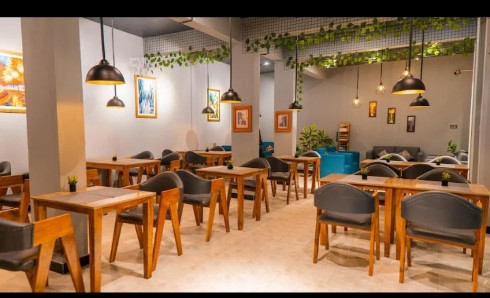
- Three cooks, Balti and Pakistani home food, plain options for children and older travellers.
01
What Balti food actually is — and what it is not
Tibetan roots, a barley economy, and the curry-house dish that has nothing to do with it.
Baltistan was culturally Tibetan long before it was anything else, and the food still is. Balti is a Tibetic language, and the kitchen vocabulary comes with it: the noodles, the dumplings, the salted buttered tea and the roasted-grain staples all have obvious cousins in Ladakh and Tibet and almost no relatives in the Punjab. The valley sits at 2,230 metres on a thin strip of irrigated land between the Indus and a wall of granite. That geography wrote the menu. Barley and buckwheat grow where wheat struggles; apricot, walnut and mulberry trees line every irrigation channel; goats and a few cattle convert mountainside grass into meat, milk and butter. Everything else has to come up the road from Islamabad, which is why what grows here is what gets cooked here.
The first thing to clear up, because it is the most common question we get by email: the "balti" on the menu of a British curry house is not this. That dish is a Birmingham invention from the 1970s, its link to Baltistan is disputed at best, and no kitchen in Skardu cooks it or has heard of it. If you arrive expecting a steel bowl of spiced lamb, you will be confused for a week. Real Balti food is milder, starchier, nuttier and far more interesting than that.
The second thing to clear up is where it lives. Balti cooking is domestic. It is slow, it is labour-heavy — hand-pulled noodles are genuinely pulled by hand — and it was never restaurant food, because until recently there were barely any restaurants. So a visitor who walks into a place in the bazaar and asks for "traditional food of Skardu" will usually be handed a chicken karahi, because that is what sells and what can be cooked in twelve minutes. The dishes below exist, and they are superb, but you have to ask for them by name and you have to give someone notice.
02
The Skardu dishes worth asking for by name
Nine things to eat in Baltistan, what they are, and how hard they are to get.
Spellings vary from village to village and no standard English transliteration exists, so if a name below does not land, describe the dish instead — everyone here knows them.
Balay — the one to eat first
Thick, hand-pulled wheat noodles in a goat-bone broth, closer to a gravy than a soup, with small pieces of meat through it. It is the dish Balti families cook for guests and the one we recommend to anyone who has exactly one local meal in them. It is filling in a way that makes sense at altitude on a cold evening, and it is mild — the flavour is meat, wheat and a little dried ginger, not chilli. Allow three to four hours from the moment someone starts the dough.
Prapu — noodles in walnut and apricot oil
The same hand-made wheat noodles, boiled and then coated in a thick paste of ground walnut and pressed apricot oil, with local herbs through it. Richer than it sounds and completely unlike anything else in Pakistani cooking. This is the dish that converts people. It is also the clearest example of the valley's three local ingredients doing all the work at once, and it can be made without meat.
Mamtu — the dumplings
Steamed dumplings filled with minced beef or mutton, onion and mild spice, usually served with a yoghurt or tomato sauce. The Tibetan ancestry is unmistakable. Mamtu is the Balti dish most likely to appear on a bazaar menu without you asking, because it holds well and tourists order it, so it is the easy win on a short trip.
Khambir and giyaling — the breads
Khambir is a thick, slightly sour leavened round, often eaten at breakfast with apricot jam and butter. Giyaling (also written gyal) is a flat cake cooked on an iron plate over wood, sometimes from buckwheat, eaten with apricot oil, honey, jam or a walnut-and-almond paste. The wood smoke is part of the flavour and does not survive a gas ring, which is why village bread tastes better than hotel bread.
Marzan — the winter one
A dense, slightly sweet mound of milled grain served with pure apricot oil pooled on top. Accounts differ on the grain and the method — some describe buckwheat, others wheat soaked for a fortnight before milling to bring the sweetness out — and we are not going to pretend there is one correct version, because there is not. It is winter food, built for people working outside in the cold, and you are unlikely to meet it in July.
Harissa — slow meat and grain
A porridge-thick blend of meat and pounded grain, cooked for hours until the two stop being distinguishable. Winter food again, and a dish shared with Kashmir rather than unique to Baltistan. Where you find it, it is usually a morning dish.
Chapshuro — borrowed, and worth it
A flat, bread-cased pie of minced meat, onion and spice. It is more strongly associated with Hunza and Gilgit than with Skardu, and we say so because half the food lists online file it under Skardu without noticing. You will still find it here, and on a long drive it is the best thing you can put in a bag.
Trout
Brown and rainbow trout, both introduced to these waters rather than native, farmed and fished around the Kachura lakes and Satpara. Usually served simply grilled or pan-fried, and that is the right treatment. It is the one expensive thing on most menus and the one most worth it, particularly eaten within sight of the water it came from.
Boiled goat, and the guest meal
At the formal end, a whole goat is boiled with little more than onion and carrot and brought out on the bone for people to carve themselves. Minimal seasoning is not a lack of effort here; it is the highest-respect preparation, and the point is the quality of the animal. If you are ever invited to this in a Balti home, accept.
Quick reference: what to order, and how much notice it needs
- Balay
- Hand-pulled noodle soup with goat. Order a day ahead. Mild. The one to try first.
- Prapu
- Noodles in walnut and apricot-oil paste. Order a day ahead. Can be made meat-free.
- Mamtu
- Steamed meat dumplings. Often available same day. The easiest Balti dish to find.
- Khambir / giyaling
- Local breads with apricot jam, butter or walnut paste. Breakfast.
- Marzan
- Sweet milled grain with apricot oil. Winter only, and rare. Ask, do not expect.
- Harissa
- Slow meat-and-grain porridge. Winter, usually mornings.
- Chapshuro
- Meat pie. More a Hunza dish; available here. Good road food.
- Trout
- Grilled or pan-fried, from the Kachura and Satpara waters. The priciest plate, and worth it.
- Namkeen chai
- Salted butter tea. Available anywhere, any time, usually free.
03
Apricot, barley and walnut: the three things everything comes back to
Why Skardu food tastes of something you cannot place.
Pressed apricot kernel oil is the signature. It is made in the villages from the kernels inside the stones, it is nutty and faintly bitter, and it goes on bread, into noodle paste, over marzan and into tea. Nine out of ten visitors who tell us a dish tasted "different, in a good way" are describing apricot oil without knowing it. Gilgit-Baltistan grows the bulk of Pakistan's apricots across dozens of named local cultivars — published production figures for the region conflict with each other, so we are not going to print one — and in Baltistan the fruit is dried on every flat roof in August and September. Buy dried apricots in the bazaar, not at the airport.
Barley and buckwheat do the structural work. They grow at altitudes that defeat wheat, they roast and mill well, and they are behind the breads, the porridges and marzan. Walnut does the richness: ground to a paste it is the base of prapu and a filling for giyaling, and it is the reason a bowl of plain noodles here is heavier than it looks.
Dairy ties it together. Butter in the tea, yoghurt with dumplings, and in the high villages a hard dried cheese that keeps all winter. None of this is seasoned the way food is seasoned further south. Cumin, black pepper, turmeric and dried ginger appear; serious chilli heat largely does not. Guests who find Lahori or Peshawari food too hot are usually comfortable here, and guests who want heat should say so, because our cooks will cheerfully add it and will never assume it.
04
What to drink in Skardu
Namkeen chai, green tea and the thing you should actually do about water.
Namkeen chai — salted butter tea, pink-brown, churned with salt, butter and milk — is the drink of the region and shares its ancestry with Tibetan butter tea. In the villages it is often taken with a spoon of roasted flour and apricot oil stirred in until it thickens, at which point several cups constitute breakfast. It tastes like warm, savoury broth rather than like tea, and whether you love it is genuinely a coin toss. Try it once. Nobody here is remotely offended if you leave it.
After that, green tea — plain, or with a little cardamom — is the reflex drink offered at every arrival, every shop and every negotiation. Accept it; it is the local handshake. Tumuro, a wild thyme-like mountain herb, is brewed as a tea in parts of Gilgit-Baltistan and is worth asking after, though it is more commonly met further north and west than in Skardu town.
On water: stick to bottled or boiled, including for brushing teeth, for the first few days. The tap water here is mountain water and is not dirty in any dramatic sense, but it carries a different mineral and microbial profile from whatever you are used to, and the combination of that and 2,230 metres is the real reason visitors have a bad second day. We keep bottled water in the rooms and refill flasks at the front desk for anyone heading out on a drive.
05
Eating out in Skardu town, honestly
What is actually there, what it costs in relative terms, and the hours that catch people out.
Skardu's eating places divide into three. The bazaar around Yadgar Chowk and the main road has plain local restaurants doing karahi, tikka, dal and tandoor bread — good, cheap, fast, usually without English menus and usually without Balti dishes. The hotels in town run buffet or set menus aimed at tour groups, which are reliable, several times the bazaar price, and rarely more interesting. Out at the lakes, seasonal places serve trout by the water in the warm months and close when the season ends.
We deliberately do not print prices on this page. Menu prices in Skardu move with the season, with the number of coaches in town, and with what it cost to bring the supplies up the Indus road that month; any figure we published would be wrong by the following summer. What is stable is the ratio: a full plate in a bazaar restaurant costs a small fraction of a hotel dinner, and trout costs several times either. Ask our front desk what guests paid that week and you will get a current answer rather than a stale one.
Three practical things people get wrong. Hours: Skardu is not a late-night town, and kitchens in the bazaar start shutting from around nine, earlier in winter and earlier again when a wedding has emptied the street. Cash: carry it, in small notes, because card machines outside the larger hotels fail more often than they work and the bazaar ATMs run dry in peak season. Ramadan: during the fasting month daytime service in the bazaar largely stops, and the evening is extraordinary — our kitchen serves guests normally throughout, but plan your day trips around the fact that the town will not feed you at two in the afternoon.
06
Vegetarian, vegan and plain eating in a meat valley
Workable — but only if you say so clearly and early.
This is the question we get most from guests travelling from India, Europe and East Asia, and most food guides to Skardu skip it entirely. The honest position: Baltistan's default assumptions are meat and dairy, and "vegetarian" is not a concept every kitchen here parses instantly. Saying "no meat" at the table is not enough, because a vegetable dish may still be built on a meat stock. Say it when you book, say it again on arrival, and be specific — our front desk writes it on the booking and tells the kitchen, and that is worth more than any request made at seven in the evening.
What works well without meat: prapu, if the walnut-and-apricot-oil version is made as it often is at home; dal; potato and turnip dishes; spinach and local greens in season; yoghurt; the breads with apricot jam and butter; and plain rice. Our kitchen cooks all of these as a matter of course, and will cook a meat-free prapu with a day's notice. What is harder: strict vegan. Butter, yoghurt and ghee are close to universal, and namkeen chai is butter and milk by definition. It is entirely manageable here with notice, and frustrating in the bazaar without it. Bring your own non-dairy alternative if it matters to you; it is not reliably available in Skardu.
The same logic covers children and older travellers, who are often the real constraint on a family trip. We keep plain rice, plain chicken, eggs, potatoes and bread available every day for exactly this reason, and nobody has to negotiate for it.
07
What our kitchen cooks, and how to ask for the real thing
Three cooks, sixteen rooms, and the one request that changes your trip.
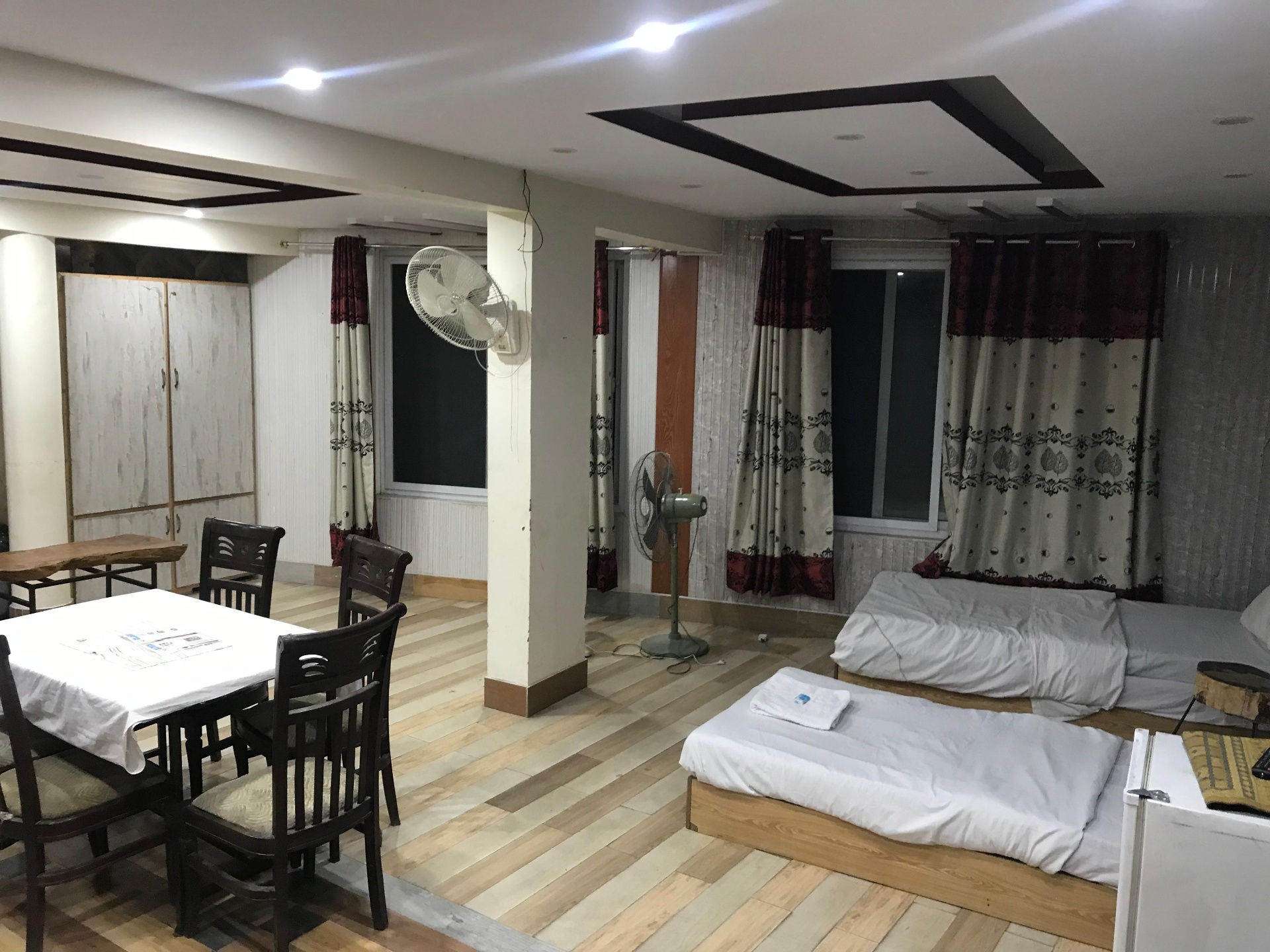
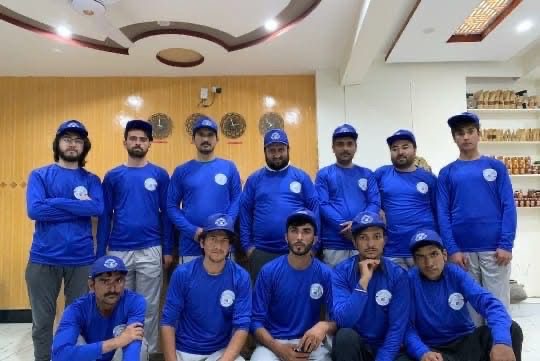
Of the ten people who run this property, three work in the kitchen, and all of them are Balti. On an ordinary day they cook two menus in parallel: Pakistani home food that any guest will recognise — karahi, daal, roti, rice, eggs and parathas at breakfast — and the Balti dishes above, on request. That split exists because most guests arrive wanting something familiar after a long travel day, and then want the local food once they have slept.
The request that changes a trip is this one: on the evening you arrive, tell the front desk you want balay or prapu tomorrow night. That is it. The noodles are pulled by hand and the broth is a slow one, so a kitchen cannot produce either at short notice, and a guest who asks at dinner time is told no — not out of unwillingness, but out of physics. Guests who ask a day ahead eat the best meal of their week. We will also pack a breakfast for a dawn start at the dunes or the Deosai road, and send a flask of tea with it, if you ask the night before.
We are not going to claim we are the only kitchen in Skardu cooking this food, because we are not, and village kitchens in Shigar and Khaplu do several of these dishes better than any hotel does. What we can say honestly is that cooking Balti food to order for a sixteen-room house is a manageable thing, and cooking it to order for a two-hundred-room hotel is not, which is most of the reason the big places do not bother.
Ring ahead and we will have balay waiting on your second night.
Call 0310 097311908
Food, altitude and the second-day stomach
What actually causes it, and the boring advice that works.
A large share of the upset stomachs we see are not food poisoning. They are a heavy, unfamiliar, fat-rich meal eaten at 2,230 metres by someone who flew in that morning, slept badly and did not drink enough water. Altitude slows digestion, dehydration is faster than it feels in dry mountain air, and apricot oil and goat fat are a lot to ask of a system that arrived from Karachi six hours ago.
So: eat lightly on arrival day. Drink considerably more water than feels necessary. Leave the big Balti meal for your second or third night, which is also when the kitchen can have it ready if you asked on arrival. Keep to bottled or boiled water, including for teeth. Be sensible about roadside food on long drives — carry chapshuro, dried apricots and nuts from the bazaar rather than taking your chances at the third tea stall past Shigar.
None of this is Skardu-specific caution. It is the same advice we would give for Leh or Lhasa, and it is the reason our first-night menu for guests who have just landed is usually soup, bread and plain rice rather than anything on the list above.
09
When to come, if you are coming for the food
The valley's eating calendar, month by month.
July to September is harvest. Apricots dry on every roof, mulberries and walnuts come in, vegetables are abundant and local, and the lake restaurants are all open. It is also the busiest and hottest stretch, and the bazaar is at its most crowded.
October is our own pick. The fruit has been dried and stored, the valley is gold, the crowds have gone, and the kitchen's vegetables are at their best before the road supply narrows. Late September and October is the fortnight we tell returning guests to book.
November to February is when the winter food exists at all. Marzan and harissa belong to these months, meat is more central, and dinner is heavier for an obvious reason. It is also when the road supply is thinnest, so fresh vegetable choice narrows and the menu simplifies. The valley is at its most beautiful and its most austere, and that includes the table.
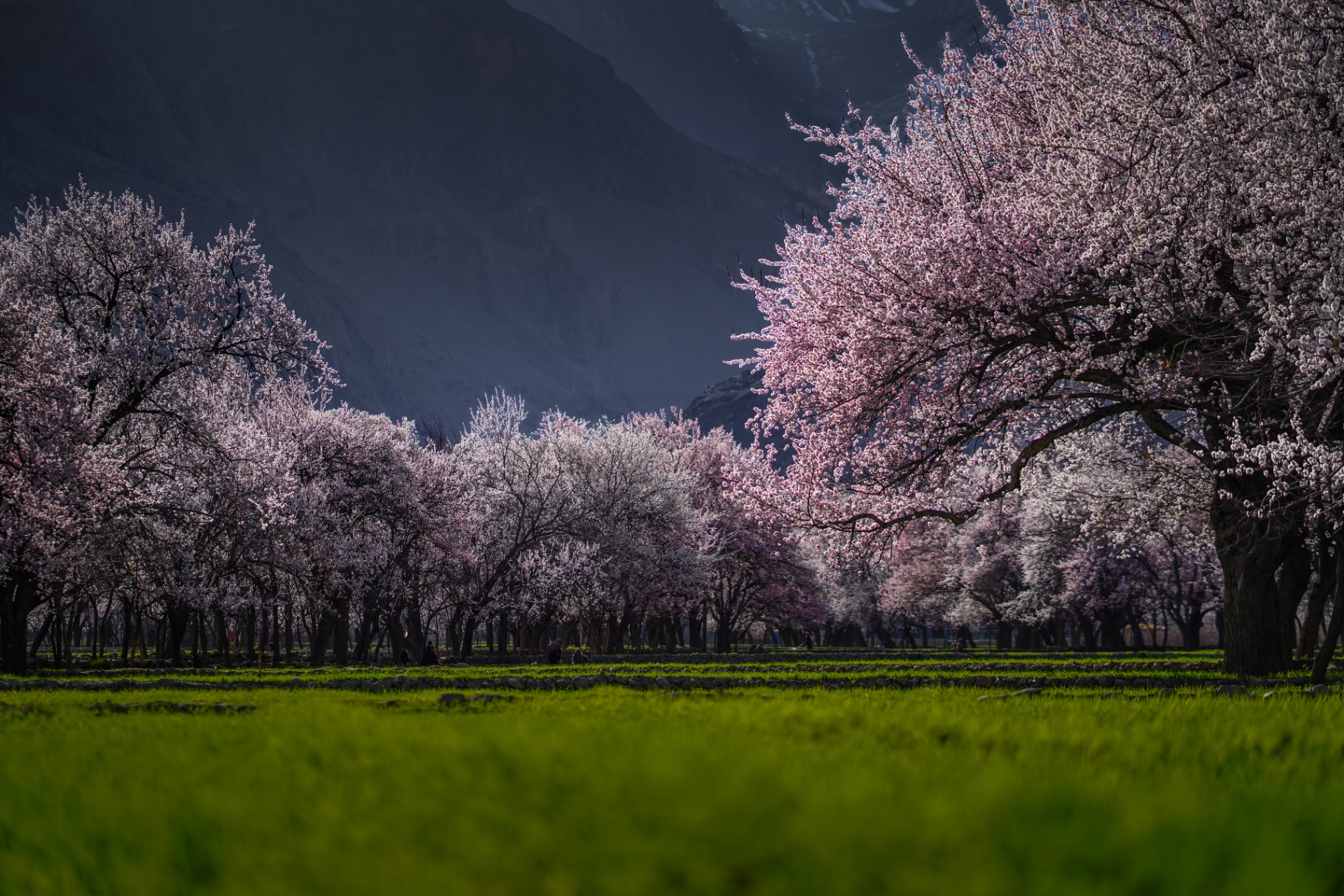
April and May are blossom and early greens. Apricot blossom, which most visitors call cherry blossom, comes first; the fruit itself is months away. If you are coming in spring, come for the orchards rather than for the harvest.
Getting around
Where to eat around Skardu, and how far it is from our gate
Drive times are what our own drivers take in normal conditions, not map estimates. What you will find is described honestly — none of these are restaurants in the city sense.
| Place | Approx. travel time | Why go |
|---|---|---|
| Our dining room, Katpana | 0 min | Balti home cooking plus plain Pakistani dishes. Balay, prapu and mamtu cooked to order with a day's notice. |
| Skardu bazaar / Yadgar Chowk | 15–20 min | Karahi, tikka, dal and tandoor bread at local prices. Busy, plain, cash only, and closing earlier than you expect. |
| Hotel restaurants in town | 15–20 min | Buffet-style Pakistani menus aimed at tour groups. Reliable, more expensive, rarely cooking Balti dishes. |
| Shangrila / Lower Kachura | ~30 min | Lakeside dining inside a ticketed resort. The trout is the reason to go; book ahead in July and August. |
| Upper Kachura | ~30 min + walk | Seasonal trout places by the water. Open in the warm months, shut or shuttered the rest of the year. |
| Shigar valley | ~45 min | Village kitchens and the fort's own dining. The best chance of apricot-oil cooking outside a private home. |
| Khaplu | ~3 hrs | A night, not a lunch. The Shyok valley still cooks the old dishes more routinely than Skardu town does. |
How we know this
The dishes, methods and ordering advice on this page come from our own kitchen in Katpana — three cooks, all Balti, cooking for sixteen rooms every day — and from what guests report back after eating in the bazaar. Dish names in Baltistan have no standard English spelling and vary village to village; where sources disagree on a name or a method, we say so rather than picking one and presenting it as settled. We do not publish restaurant prices: menu prices in Skardu move with the season and with the cost of getting supplies up the Indus road, and any figure printed here would be wrong within a few months. Background on Balti language, apricots and butter tea is cited below rather than stated from memory.
Reviewed: Each season, and whenever the kitchen's seasonal menu changes.
Written and checked by the team that runs the house in Katpana, Skardu — the people who watch the Deosai road open and close, book the drivers, and answer the phone at midnight. Our editorial standards.
Sources
Where the figures come from
- Balti language — Wikipedia ↗
- Balti as a Tibetic language, and the Tibetan cultural root behind the food vocabulary.
- Traditional Baltistan Food — Migrationology (Mark Wiens) ↗
- First-hand account of a Skardu family meal: balay, prapu, gyal, marzan, boiled goat and butter tea.
- Butter tea — Wikipedia ↗
- The tea, salt and butter preparation shared across the Tibetan cultural region.
- GB: Pakistan's largest apricot producing region — Pamir Times ↗
- Named local apricot cultivars across Baltistan, Gilgit and Hunza. Published tonnage figures conflict, so we quote none.
Questions
Skardu food: common questions
Balay — thick hand-pulled wheat noodles in a goat-bone broth — is the dish Balti families cook for guests and the one most worth seeking out. After that: prapu, noodles coated in ground walnut and apricot oil; mamtu, steamed meat dumplings; and in winter marzan, a sweet milled-grain dish served with apricot oil. None of these usually appear on a printed menu, so ask for them by name and give the kitchen a day's notice.
Rooms & prices →Come hungry, and tell us the night before
Arcadian Hotel & Resort is a sixteen-room house in Katpana, about ten minutes from Skardu International Airport and about fifteen from the bazaar. Rooms are heated, hot water is generator-backed against the valley's load-shedding, and the kitchen is run by three Balti cooks who will make balay, prapu or mamtu for anyone who asks a day ahead — and plain rice and chicken for anyone who would rather not.
Deluxe Double rooms are PKR 10,800 a night plus tax, and Economy Single rooms PKR 9,180 plus tax. Packed breakfasts and a flask of tea go out with guests leaving early for the dunes or the Deosai road, on request the night before.
To book a room, order a Balti dinner for your second night, or simply ask what is in season in the bazaar this week, call or WhatsApp our front desk on 0310 0973119.
Keep reading